Volunteering at the See Yup Temple: Caring for the Fire-Affected Collection 在四邑關帝廟做志願服務:照護受火災影響的廟藏文物
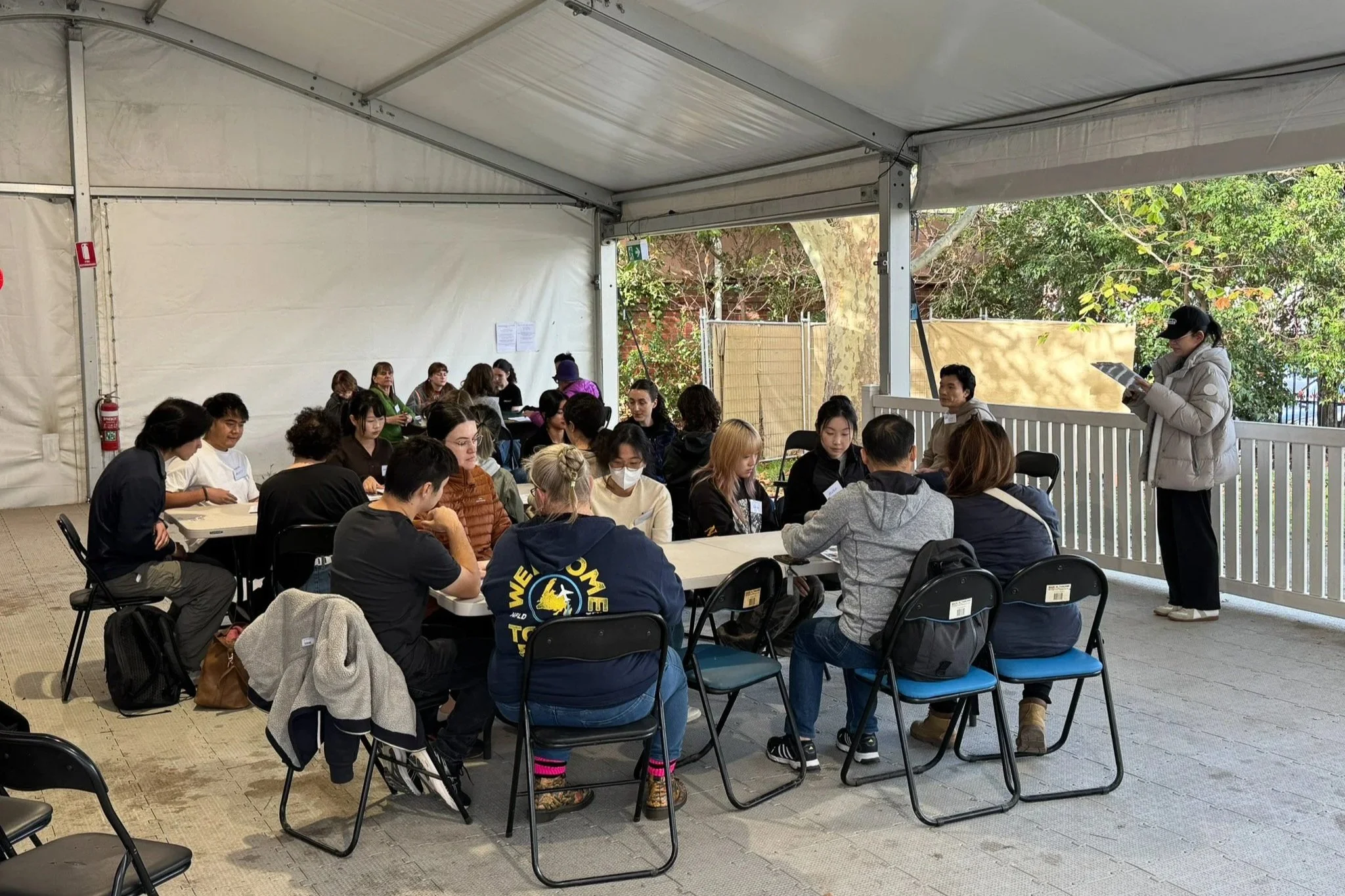
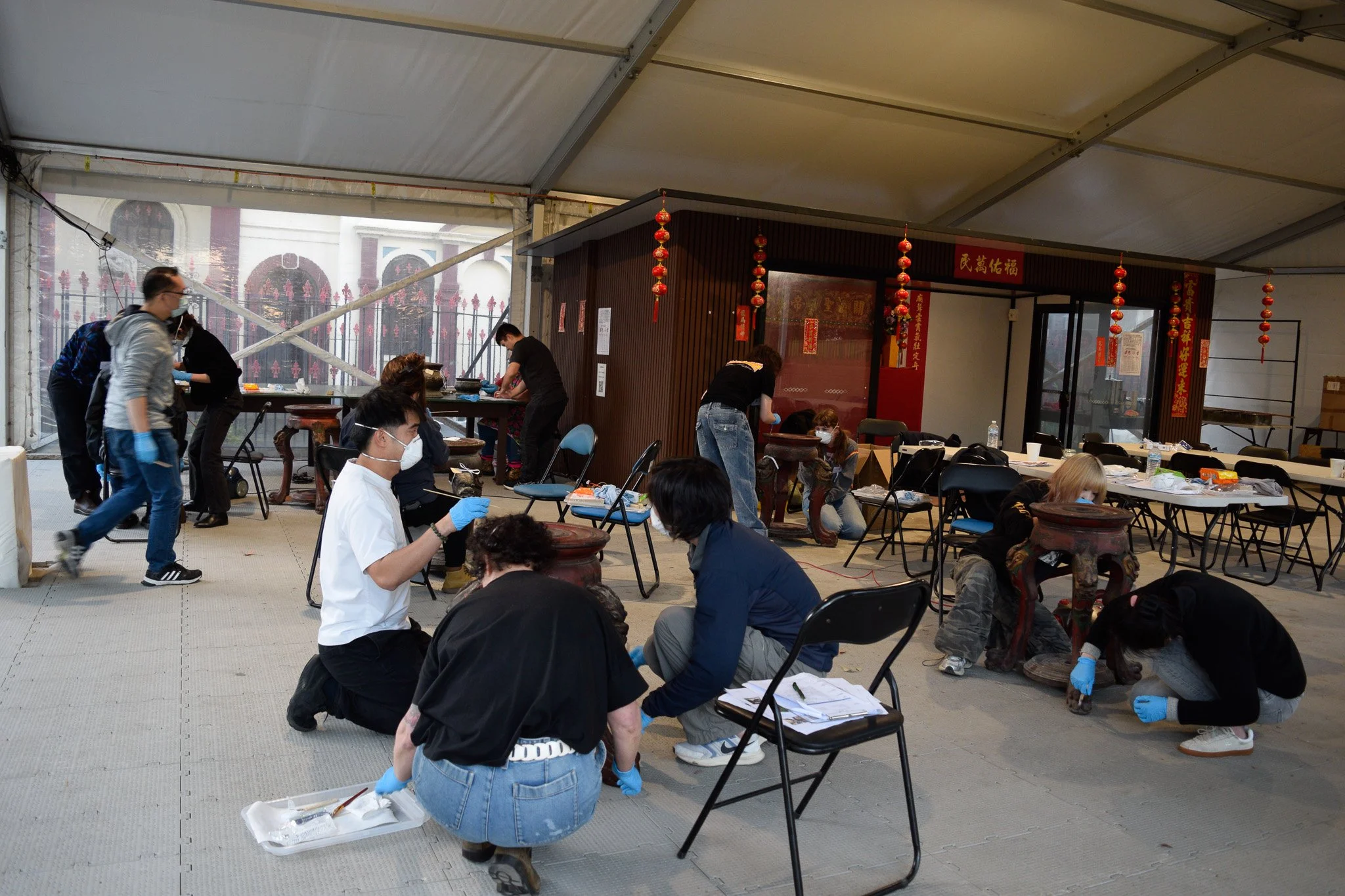
This year volunteers have come together to volunteer every second Sunday to document and clean the soot damaged collections belonging to the See Yup Temple. It has been a moment to help with the recovery of the See Yup Temple after the terrible fire in 2024.
今年,志願者每隔一個星期日聚集在四邑關帝廟,共同記錄並清潔受煙灰影響的廟藏文物。這項工作是四邑關帝廟在 2024 年嚴重火災後修復工作的一部分。
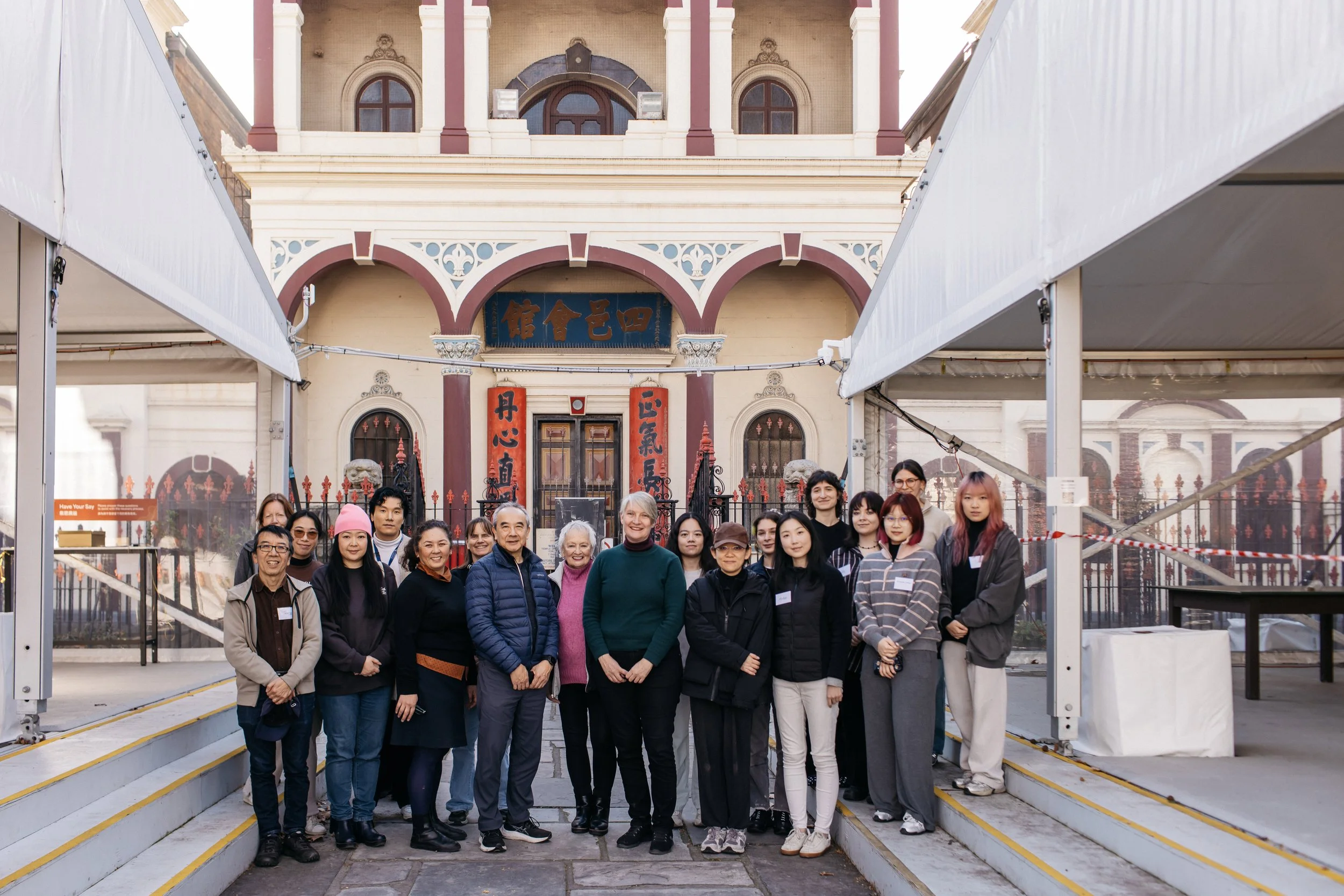
Volunteers and project team at See Yup Temple during the Community Heritage Grants workshop series. Photo: Marie-Louisa
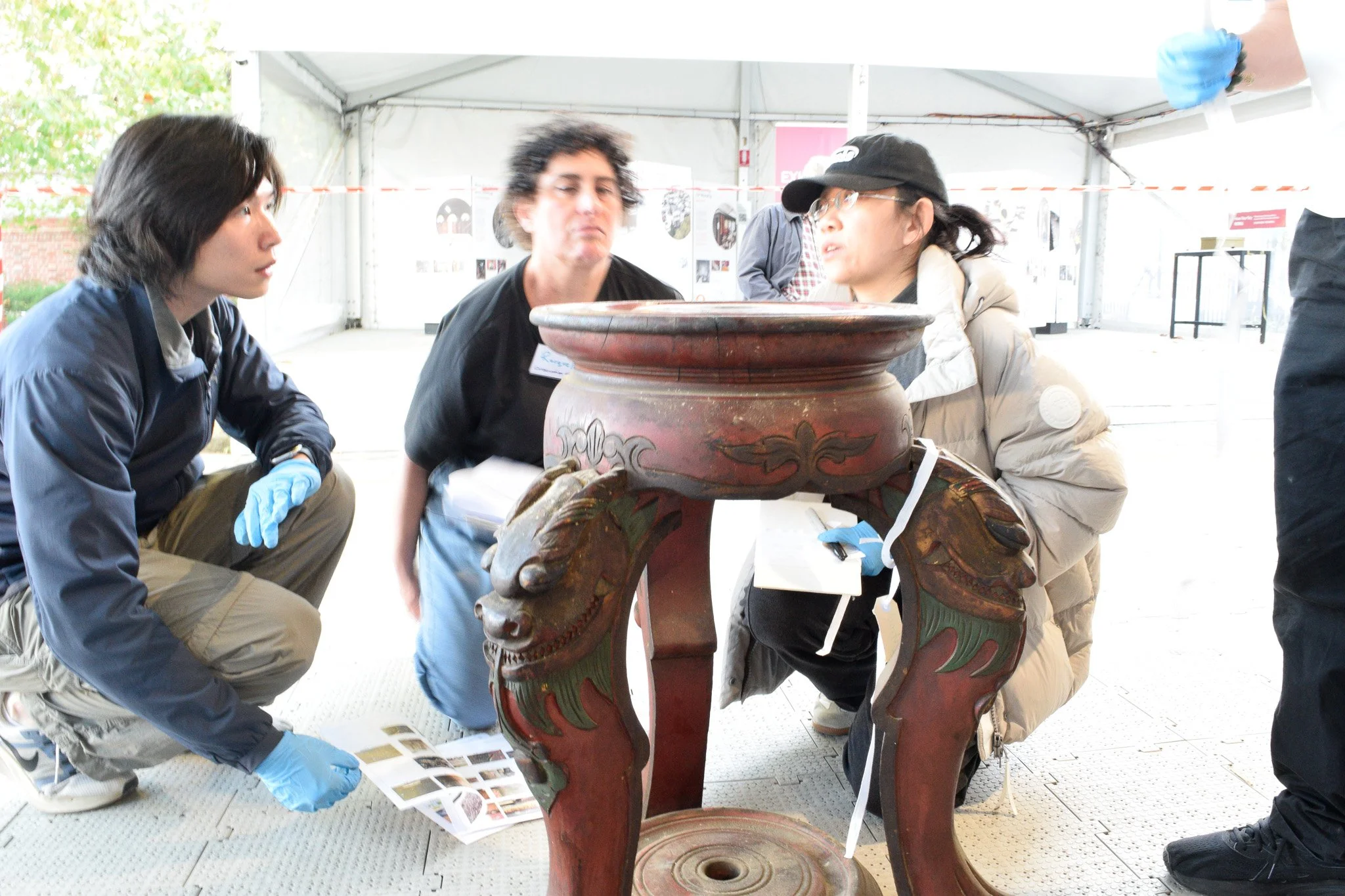
Together we have examined up-close the beautiful craftsmanship of the many objects damaged in the fire, shared knowledge about them and why caring for the See Yup Temple and their collections is important.
For some volunteers, the project has also offered a personal way to reconnect with Chinese Australian heritage. As volunteer Rosie Chiew reflected:
我們一起近距離觀察多件受火災影響文物的精美工藝,分享與這些文物相關的知識,也進一步思考為什麼照護四邑關帝廟及其館藏如此重要。
對一些志願者而言,這個項目也提供了一種重新連結自身華人澳洲歷史與文化遺產的方式。志願者 Rosie Chiew 分享道:
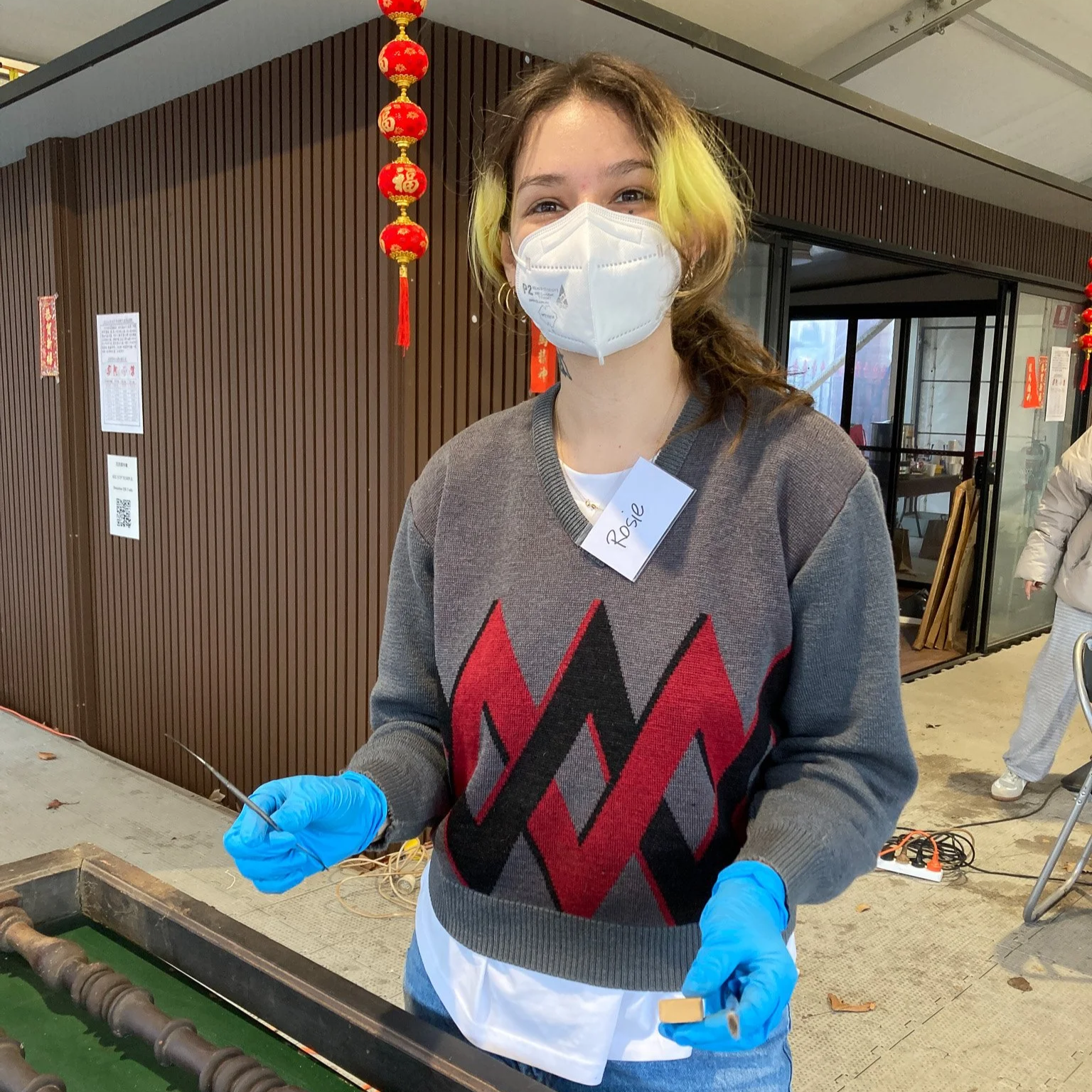
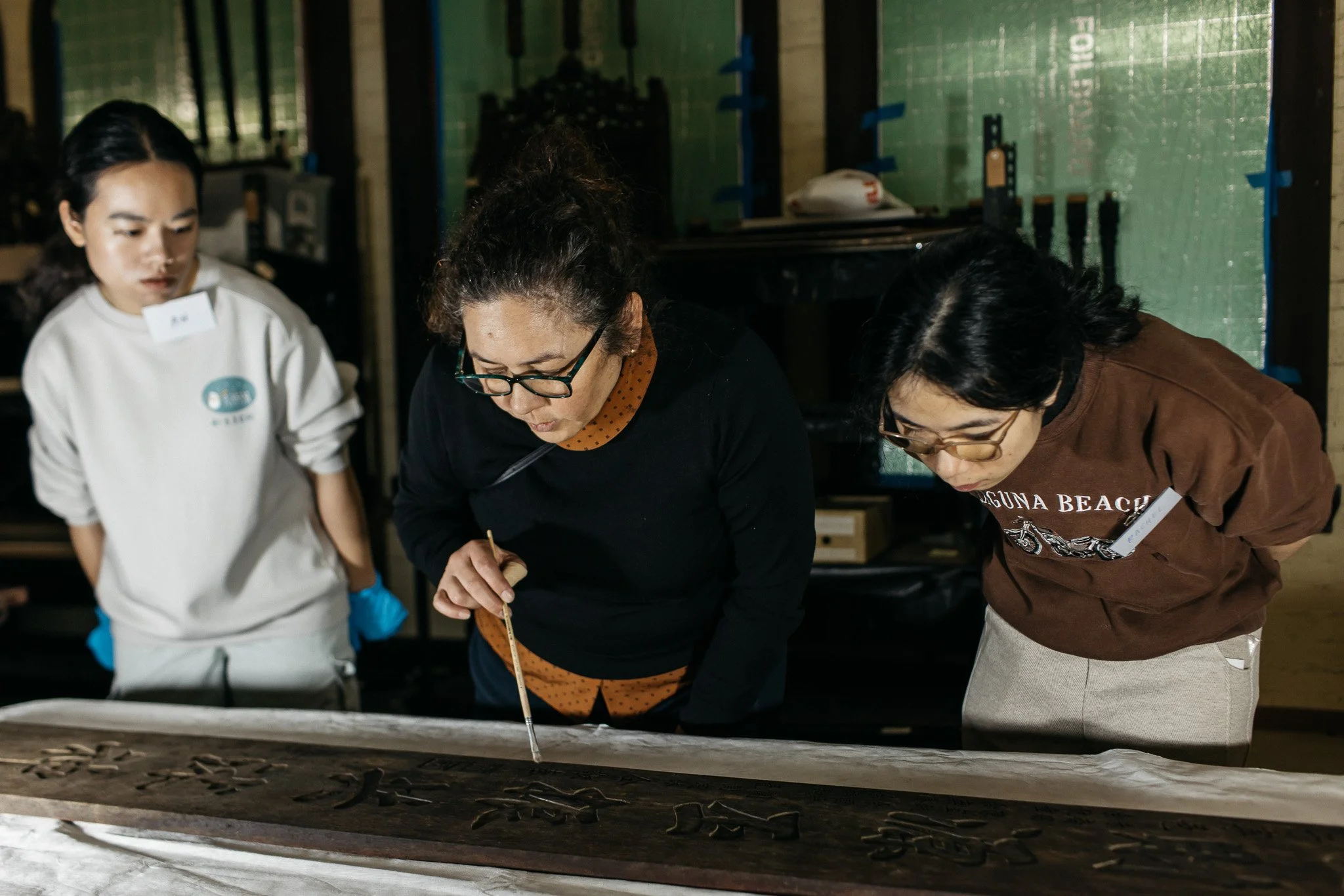
Volunteer Rosie Chiew taking part in documentation and cleaning work at See Yup Temple. Photo: Nicole Tse.
“My Gong Gong’ s family came from See Yup during the gold rush. This project feels like a special way for me to reconnect and preserve the Chinese heritage lost through assimilation and when my Gongie passes.
我公公(Gonggong)的家人在淘金熱時期從四邑來到澳洲。對我而言,這個項目是一種很特別的方式,讓我重新建立連結,並保存那些在同化過程中逐漸流失的華人文化遺產。”
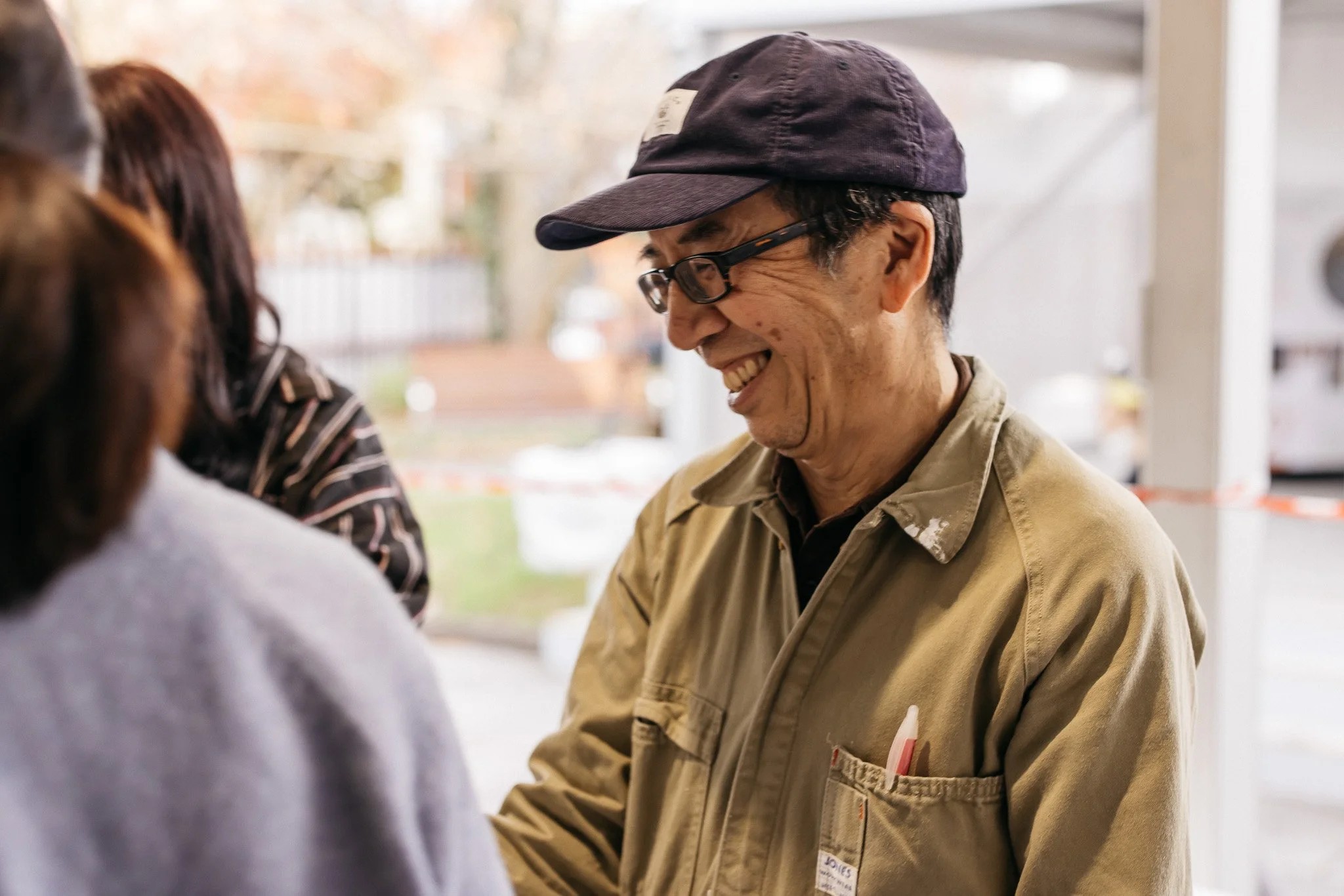
Working Together at the Temple 在廟宇中一起工作
The workshops have also been a chance to learn from people who know and care for the temple. Mr Chen has welcomed volunteers into temple practice, Michael Li has shared knowledge about the temple, and President Michael Lam has worked alongside volunteers with the collection.
工作坊也讓志願者有機會向熟悉並照護廟宇的人學習。陳先生帶領志願者參與廟內實踐,Michael Li 分享對廟宇的了解,而主席 Michael Lam 也與志願者一起參與廟藏文物的工作。
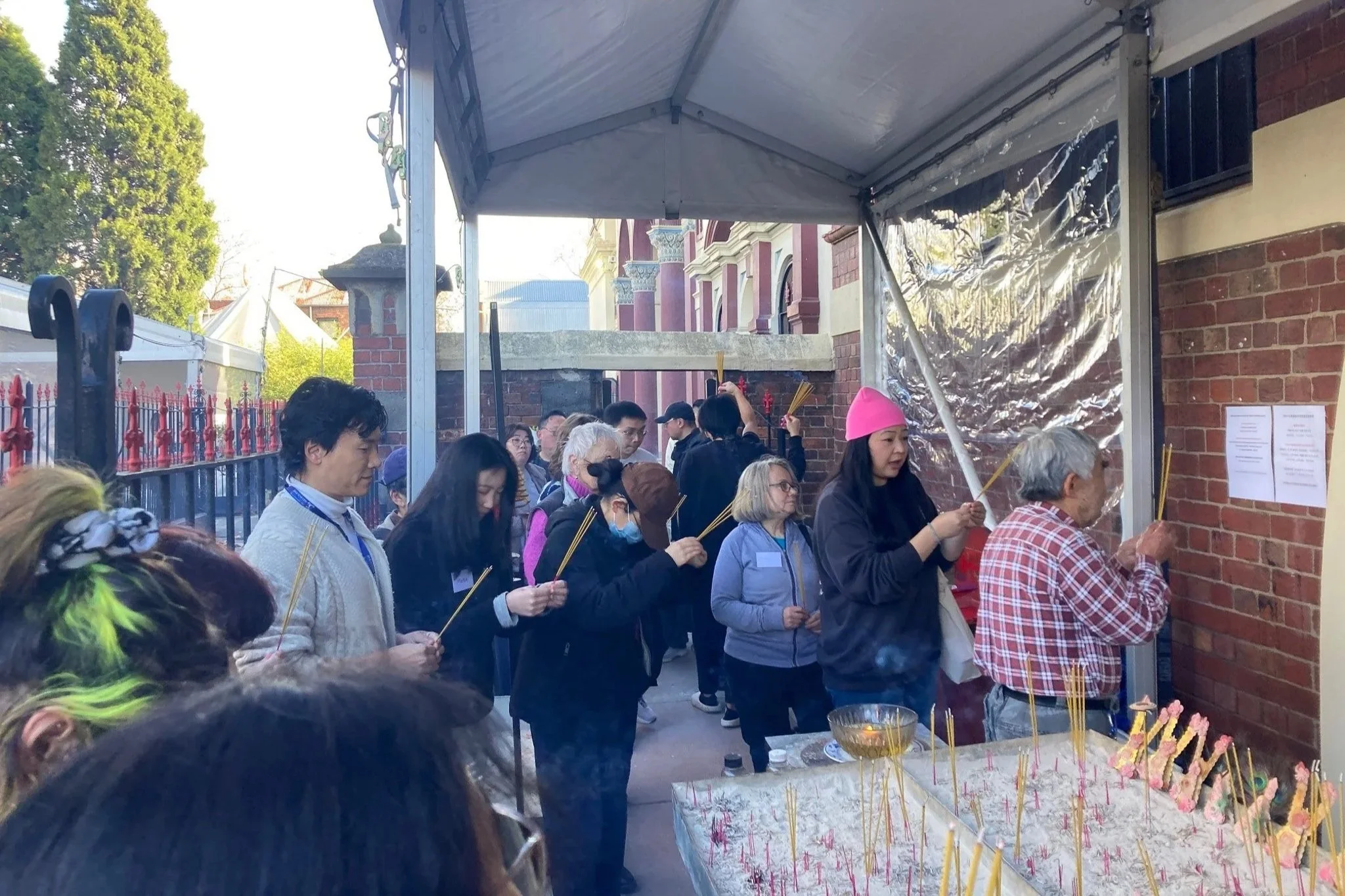
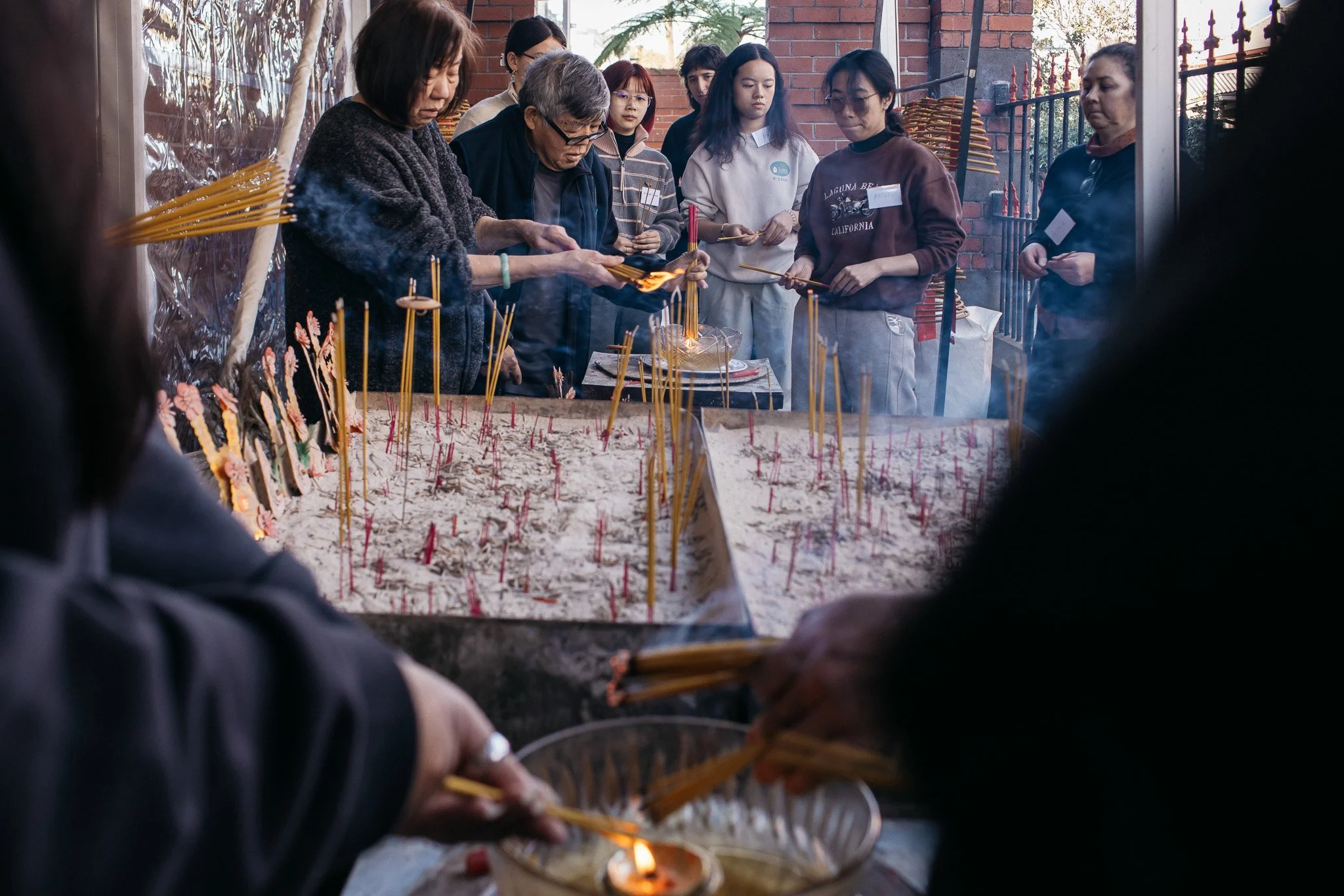
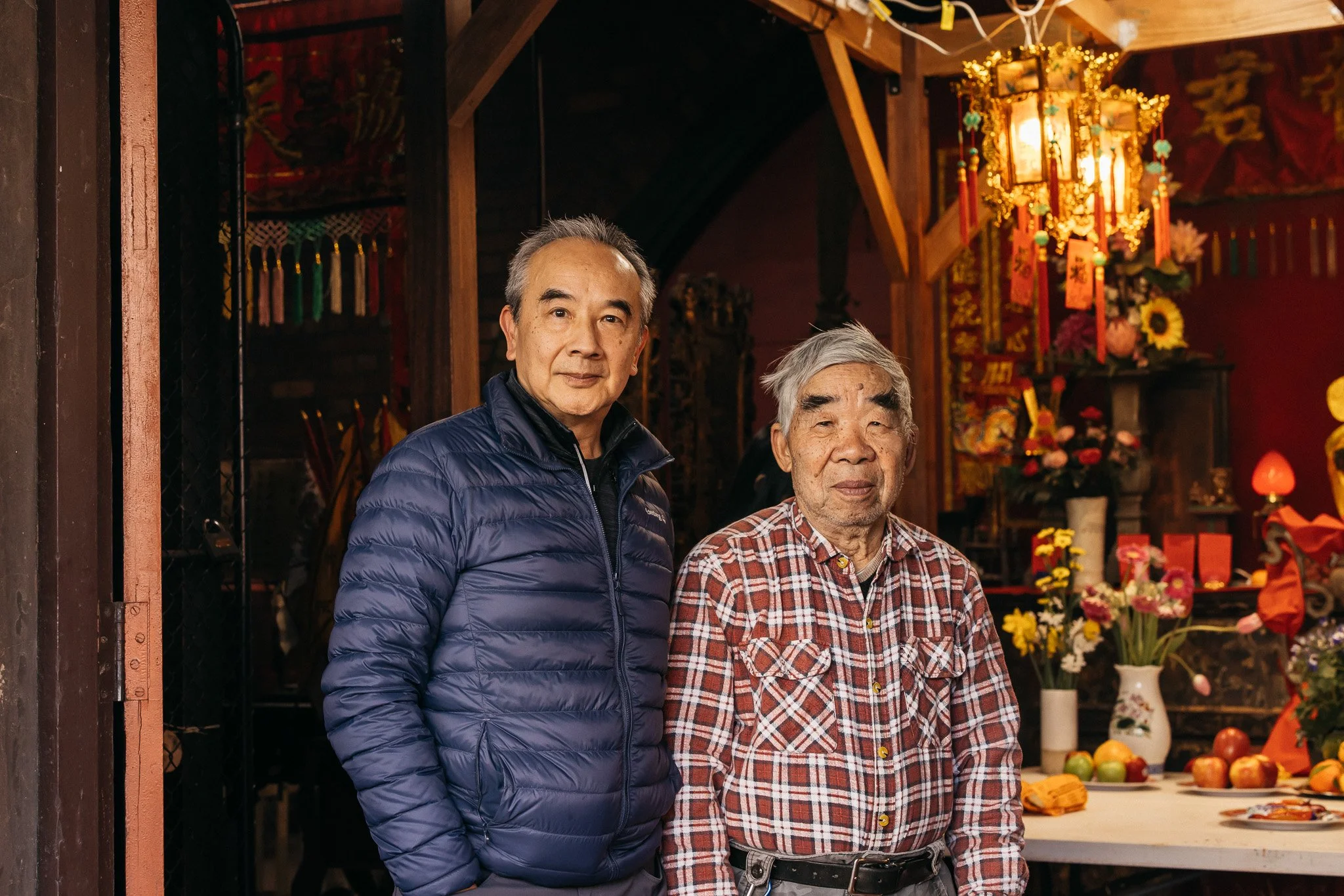
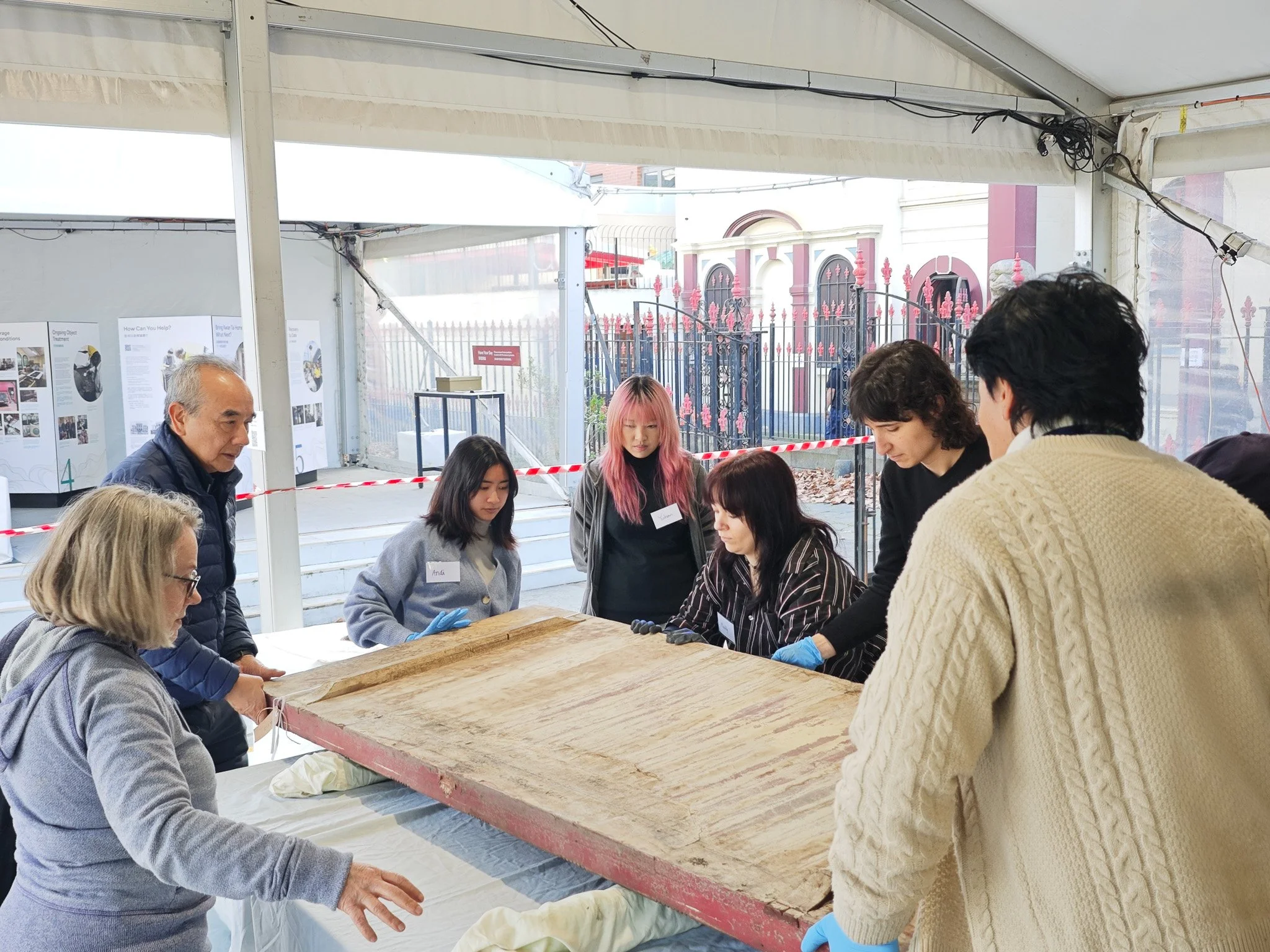
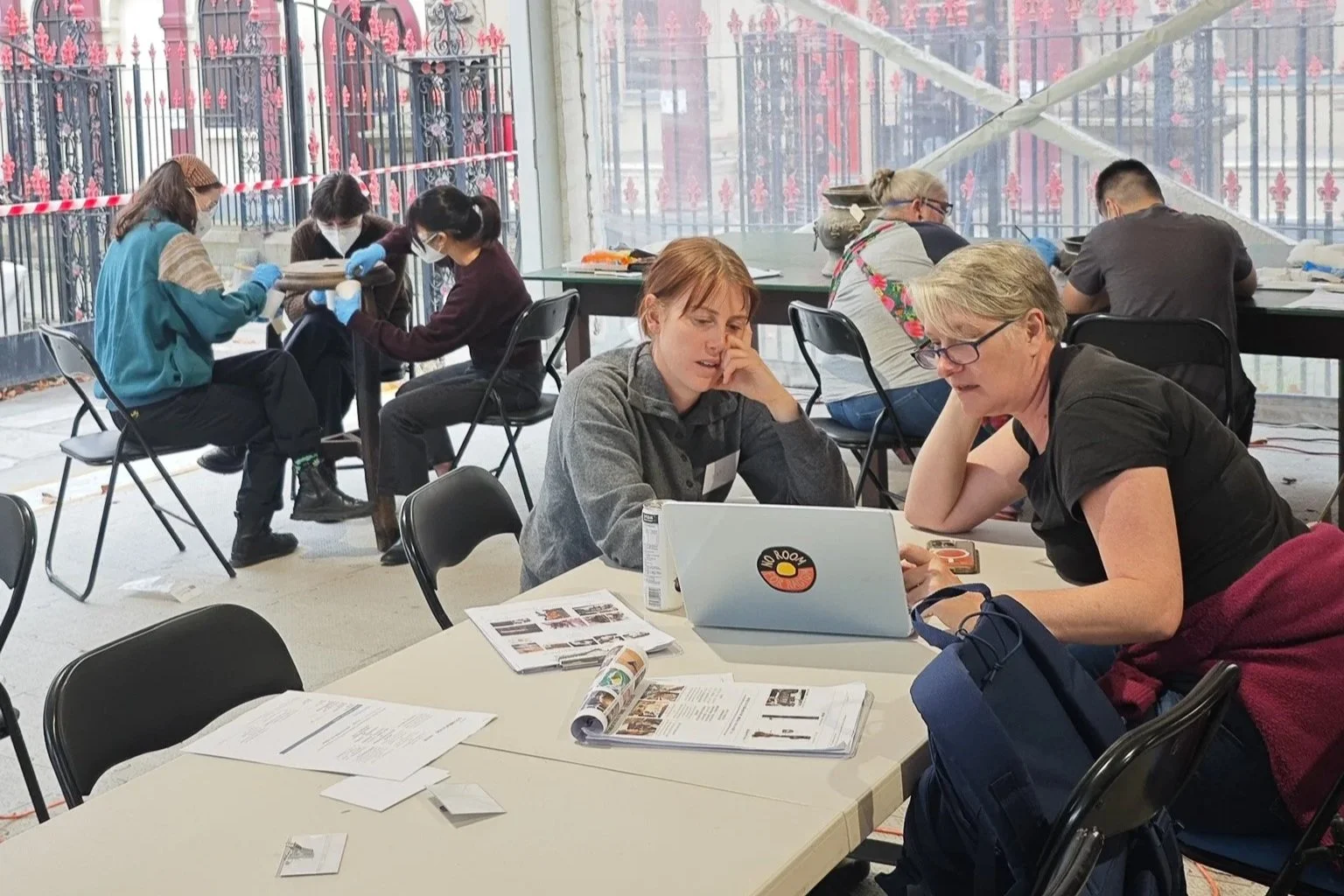
Since May over 30 volunteers have assisted with the documentation, assessment and careful cleaning of objects damaged in the fire over eight training workshops at the temple on Sundays.
自五月以來,已有超過30名志工在週日於寺廟舉行的八場培訓工作坊中,協助進行火災受損文物的記錄、評估及細心清潔工作。
Learning Conservation Together 一起學習文物保護
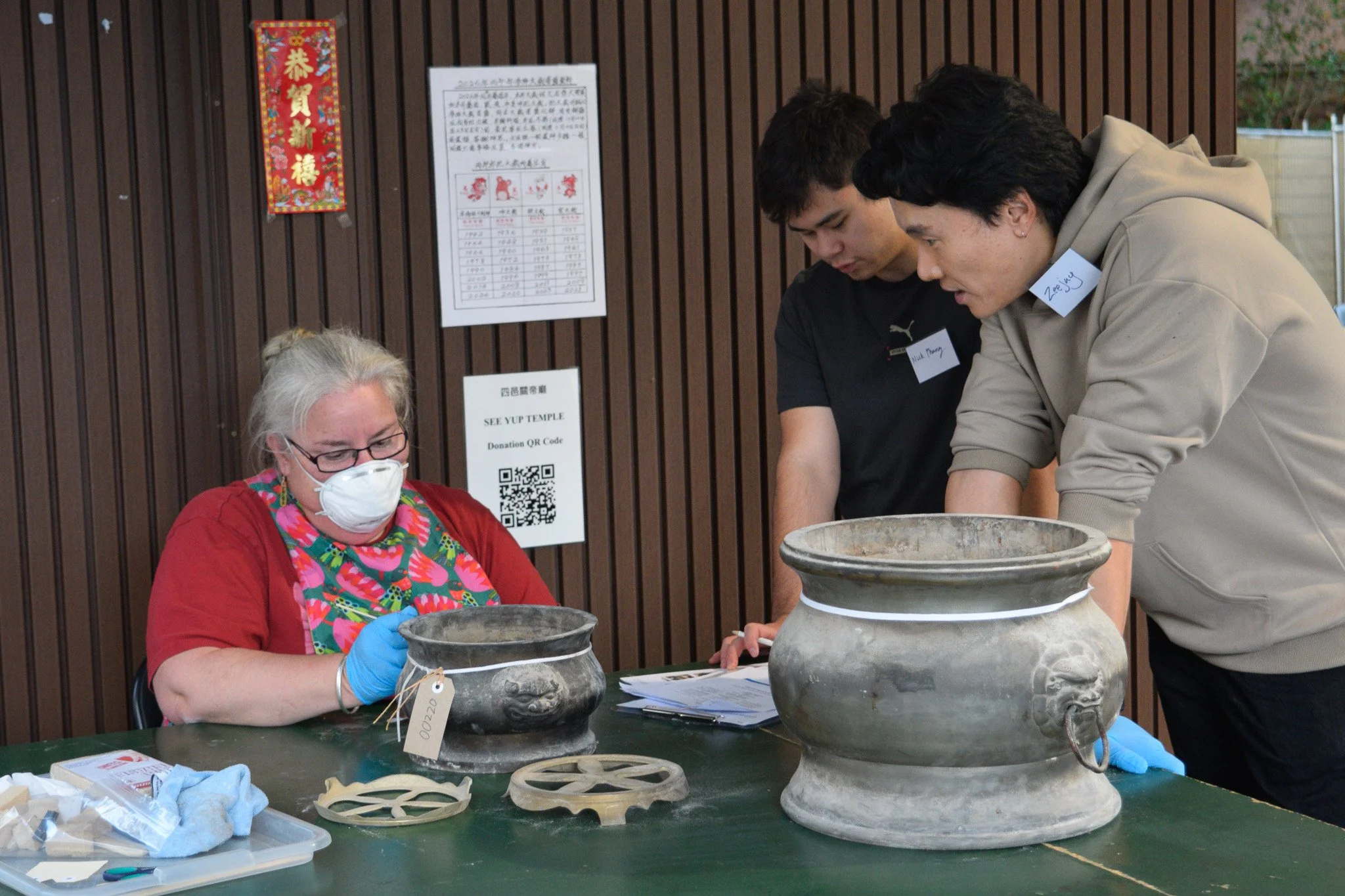
It has included specialist conservation training and supervision from Danni Lin and Zeejay Tan, graduates of the Robert Cripps Institute for Cultural Materials Conservation at the University of Melbourne with the support of Nicole Tse and Sophie Couchman.
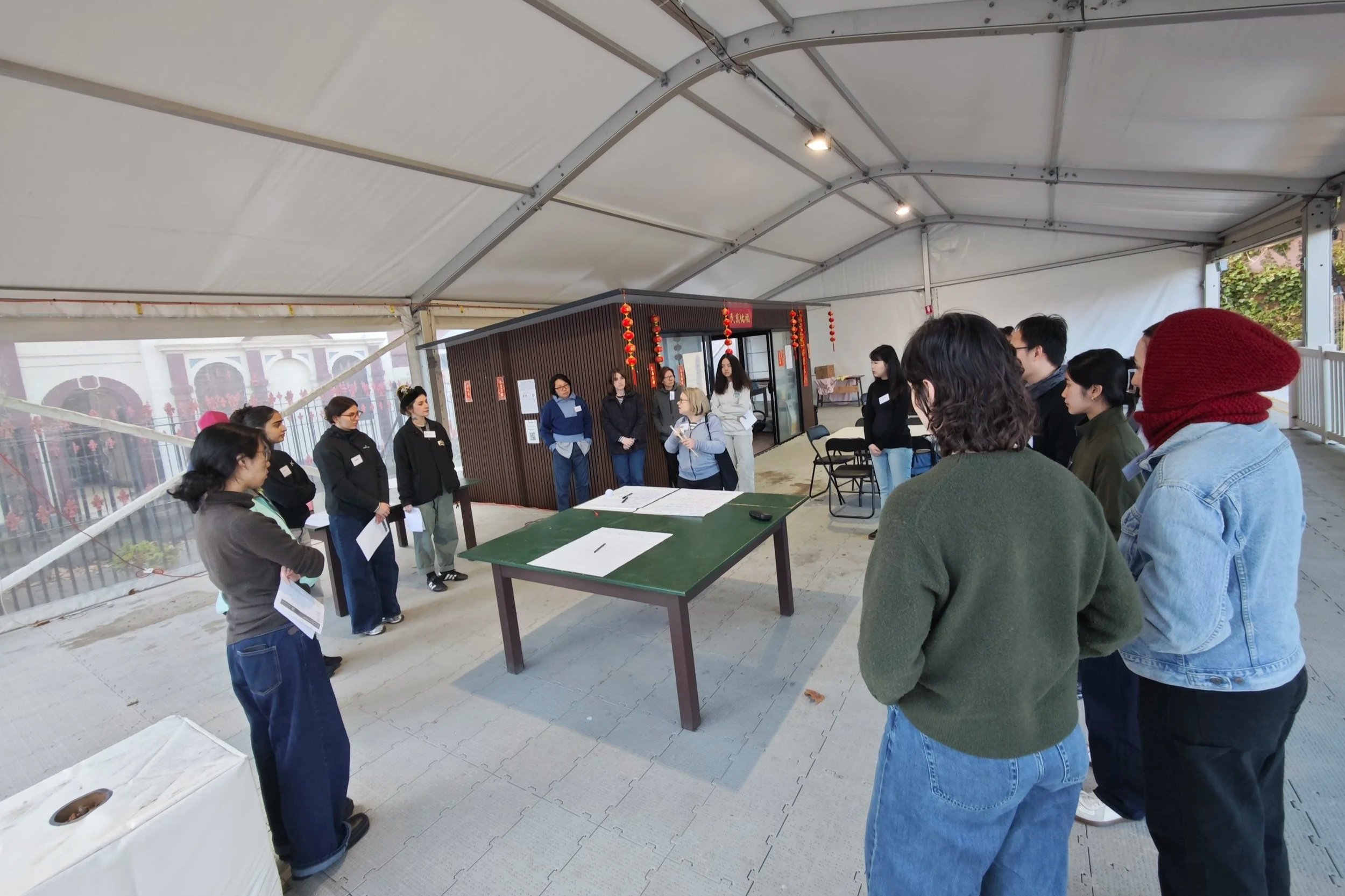
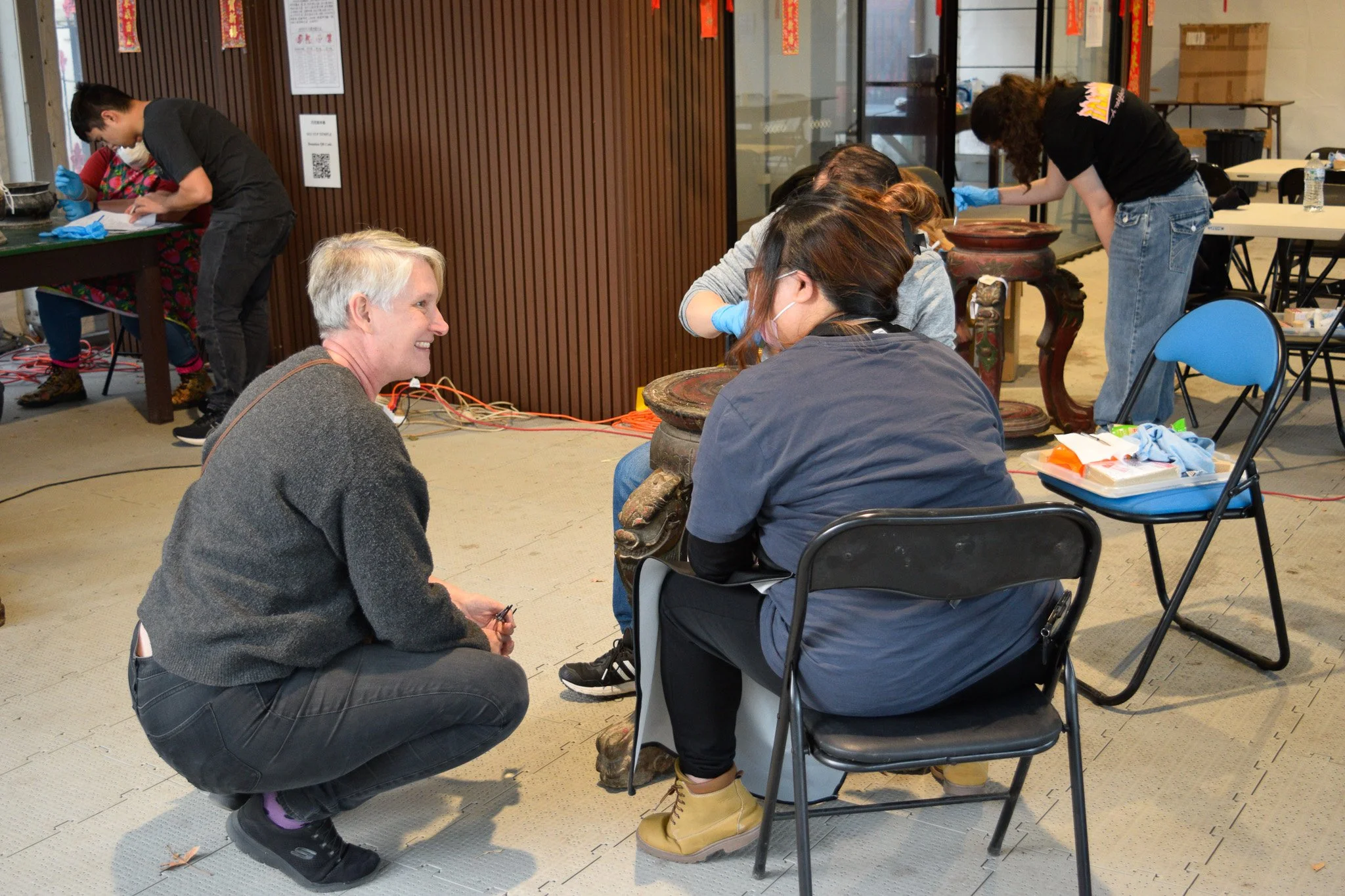
Each workshop combines hands-on work with conservation training and discussion. The project team works alongside volunteers to look closely at objects, discuss their condition, demonstrate cleaning approaches and support volunteers as they develop confidence with different materials and objects.
工作坊包括由墨爾本大學羅伯特克里普斯文化材料保護研究所畢業生 Danni Lin(林丹妮) 和 Zeejay Tan(談卓嘉) 提供的專業文物保護培訓與指導,並獲 Nicole Tse(謝麗公)副教授及 Sophie Couchman(柯秀芬)博士支持。
每場工作坊都將實際操作與文物保護培訓和討論結合起來。項目團隊與志願者一起仔細觀察文物、討論其狀況、示範不同的清潔方法,並在志願者逐步熟悉不同材料與文物的過程中提供指導與支持。
Looking Closely, Cleaning Carefully 仔細觀察,小心清潔
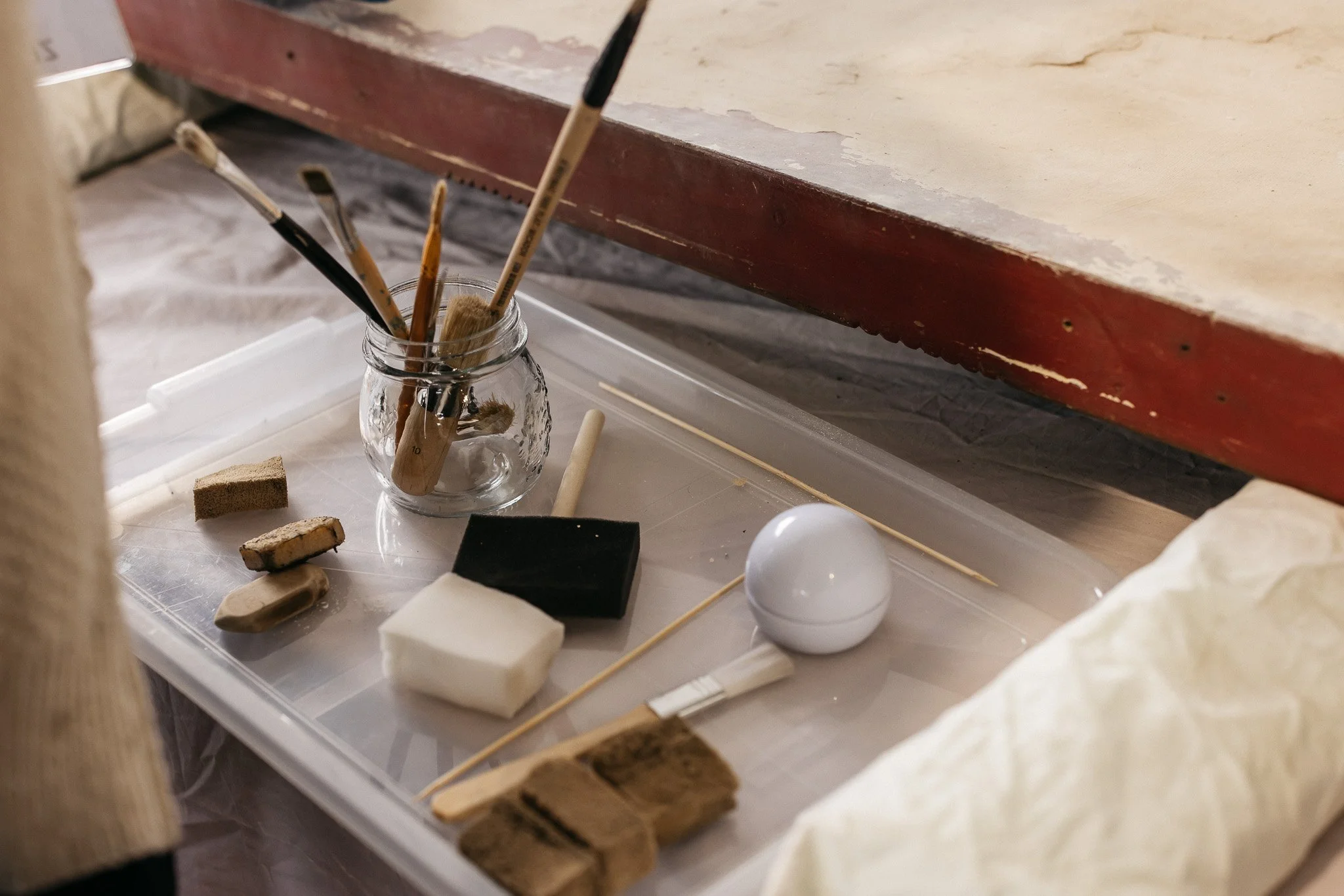
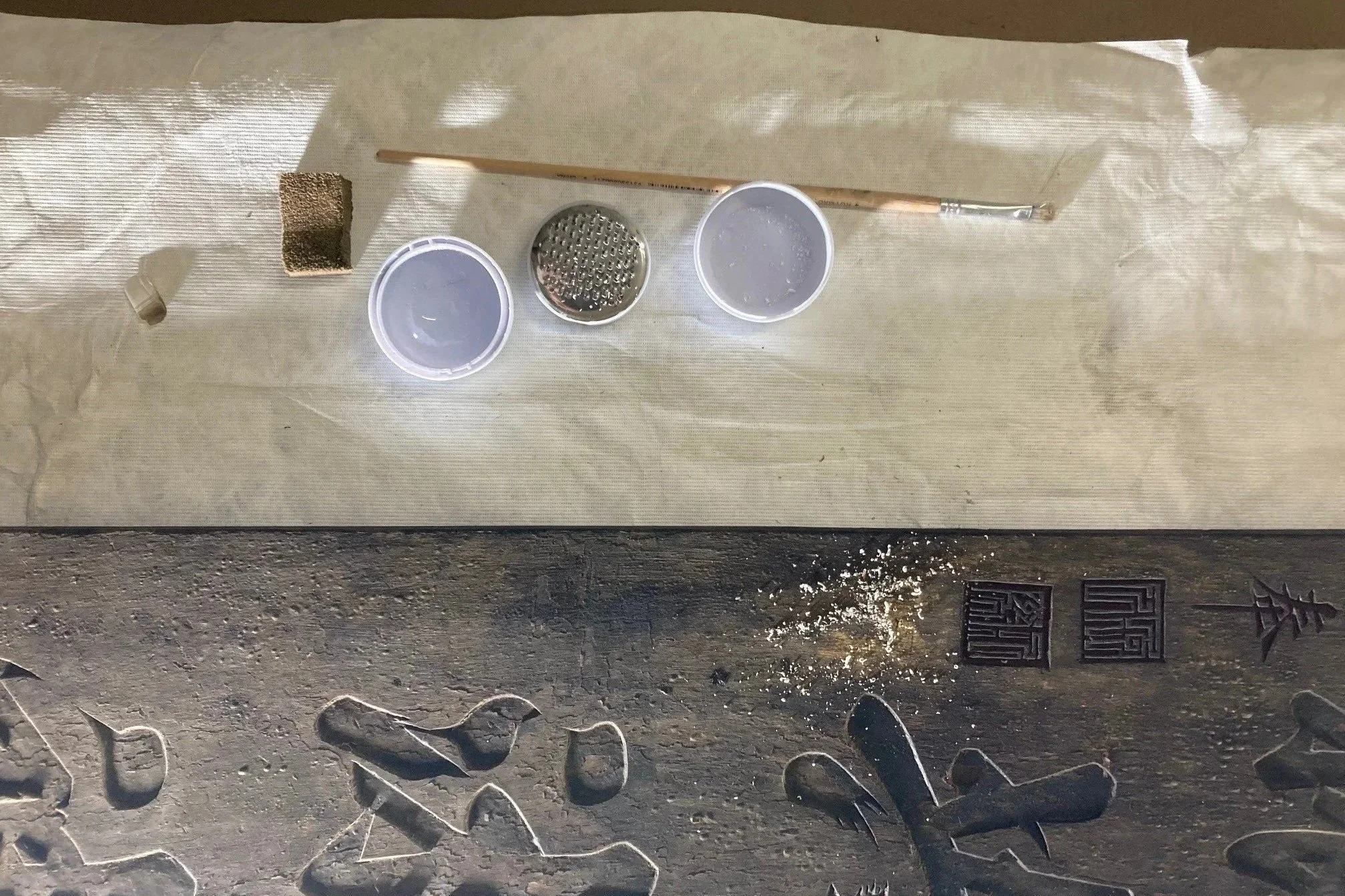
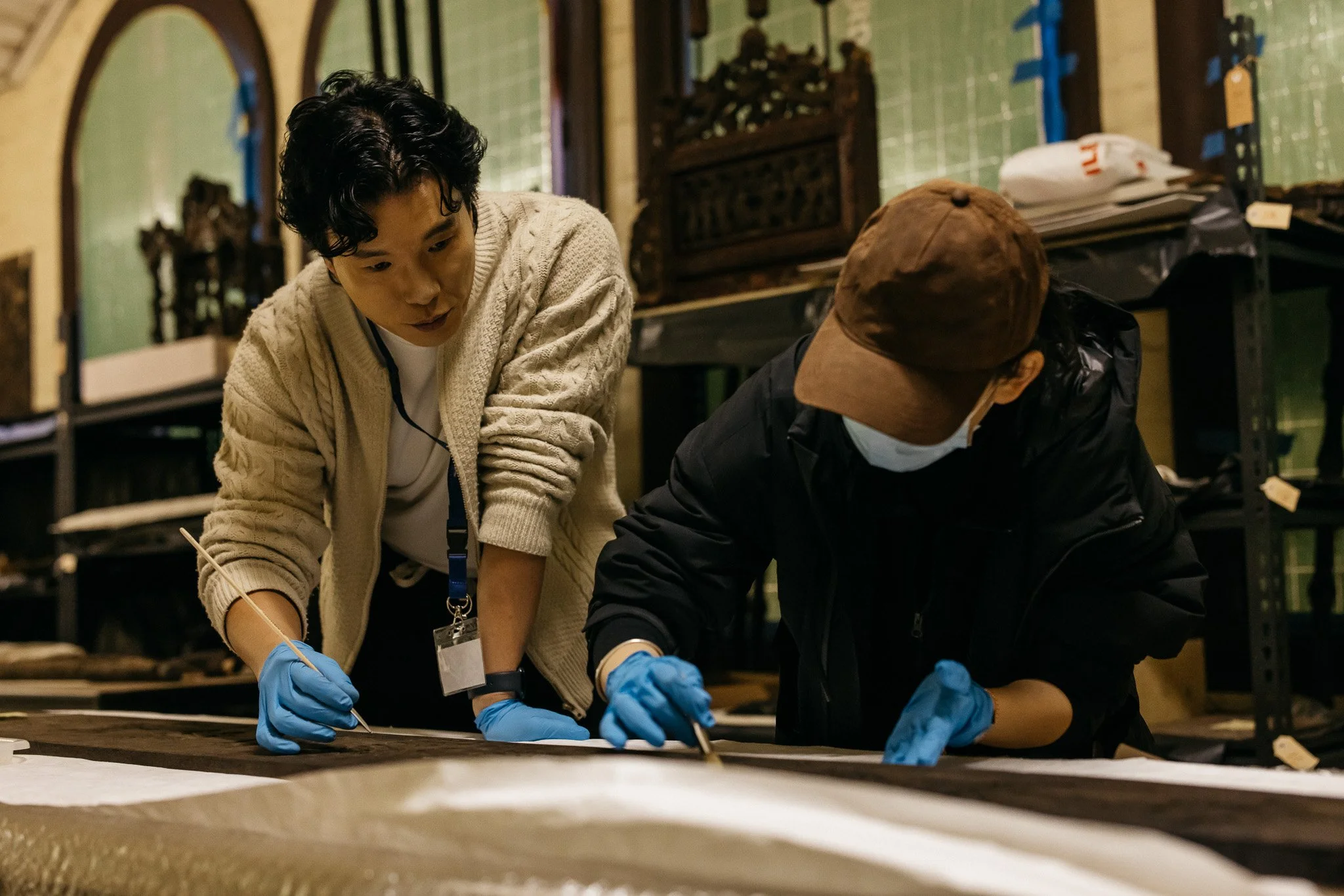
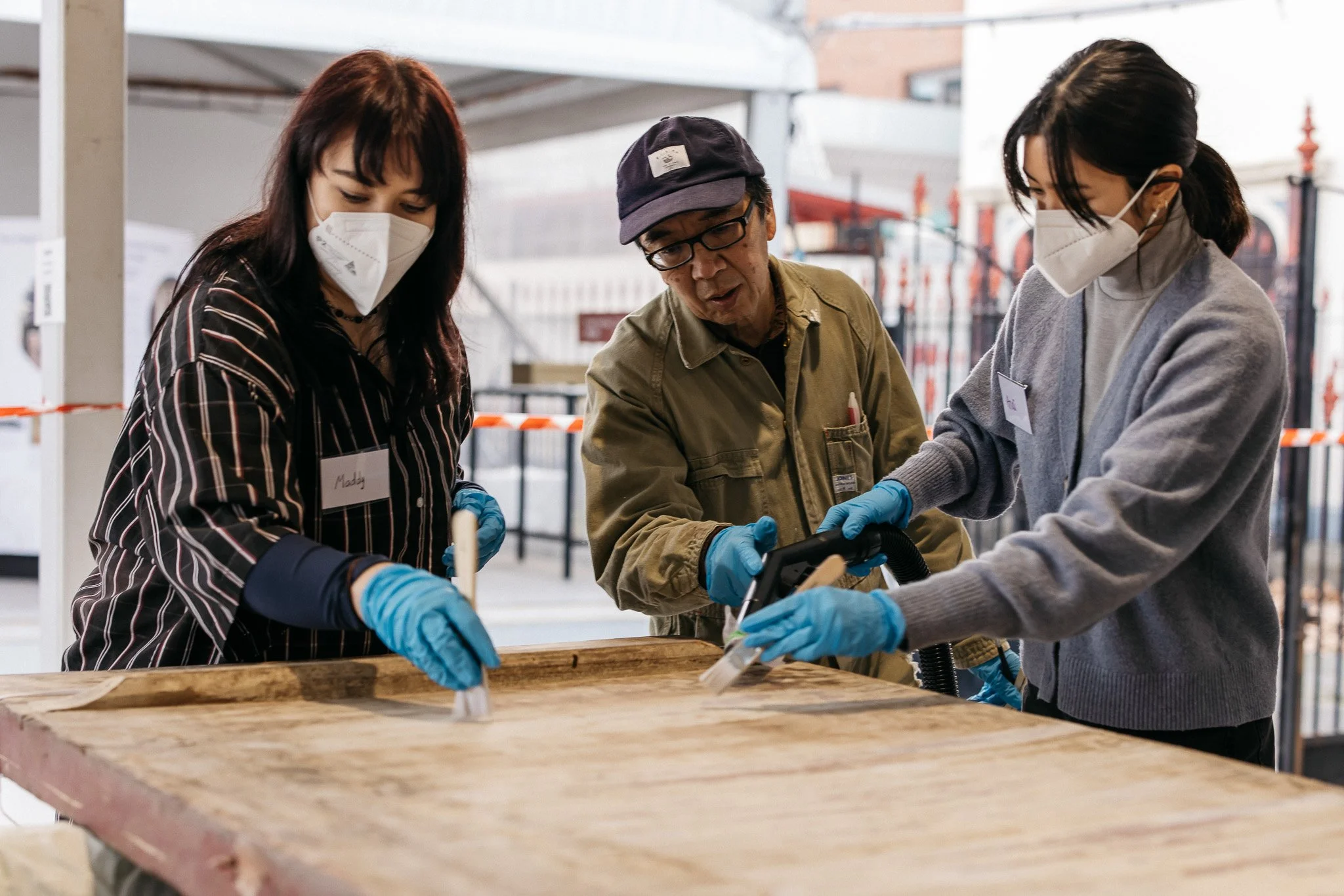
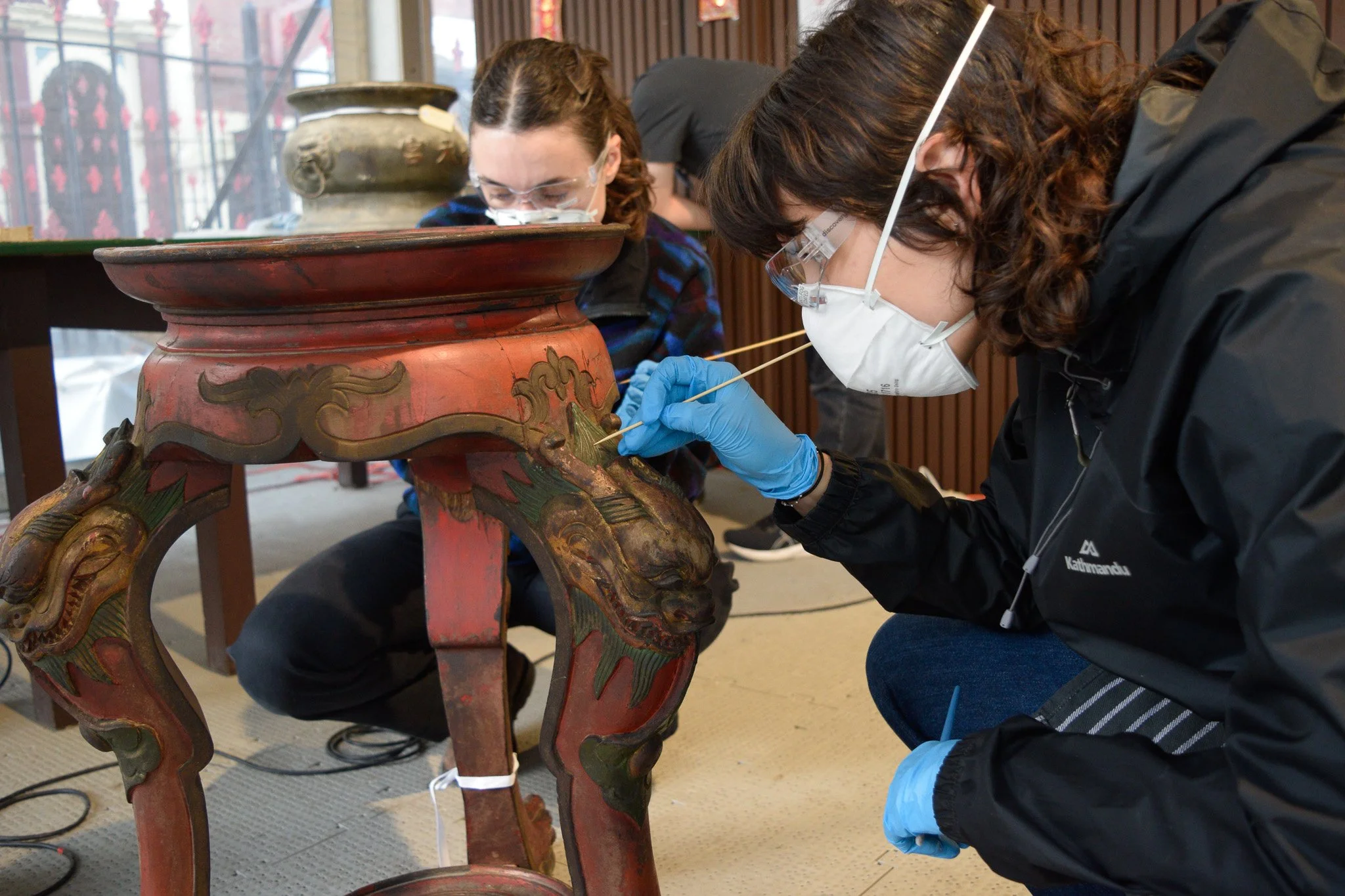
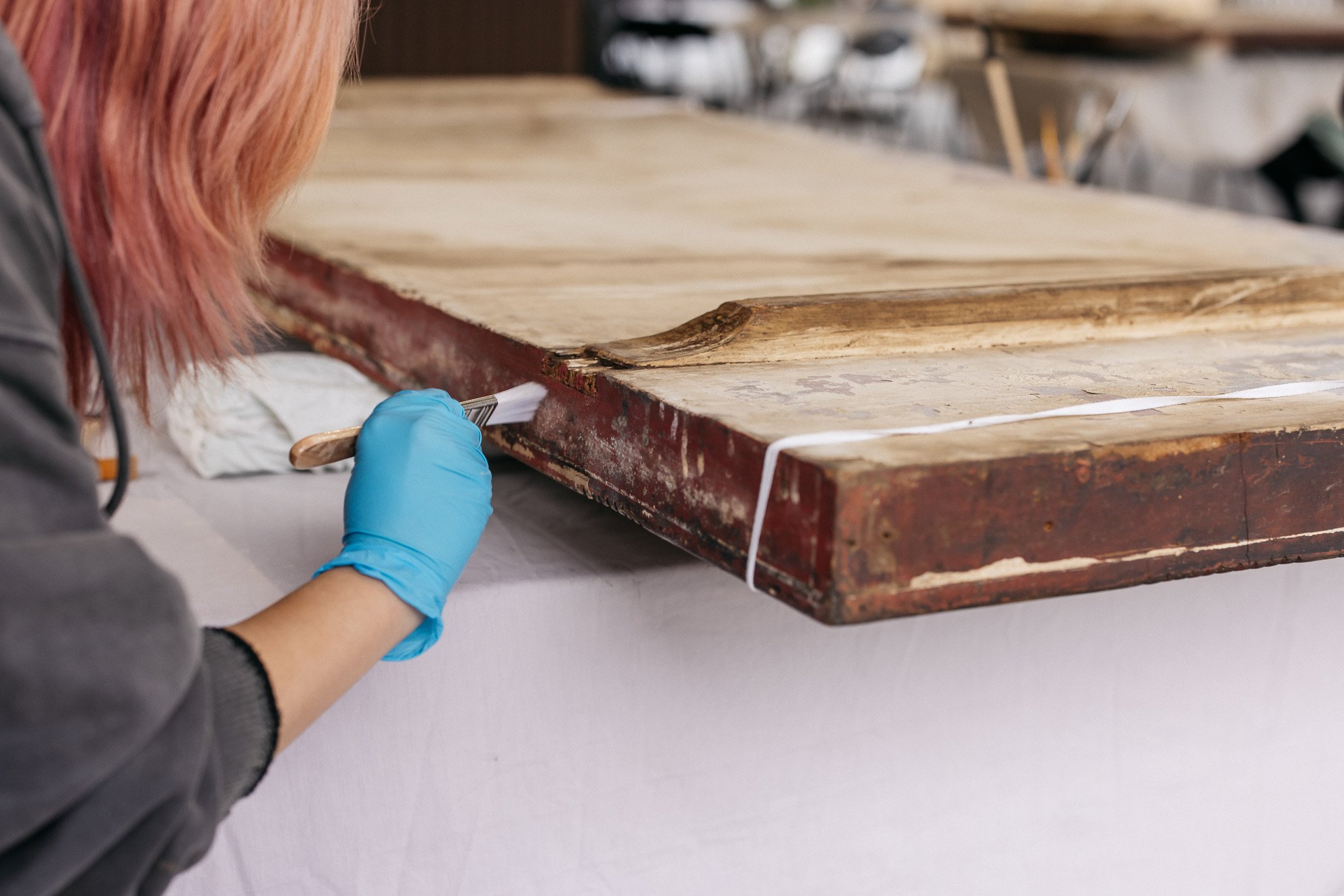
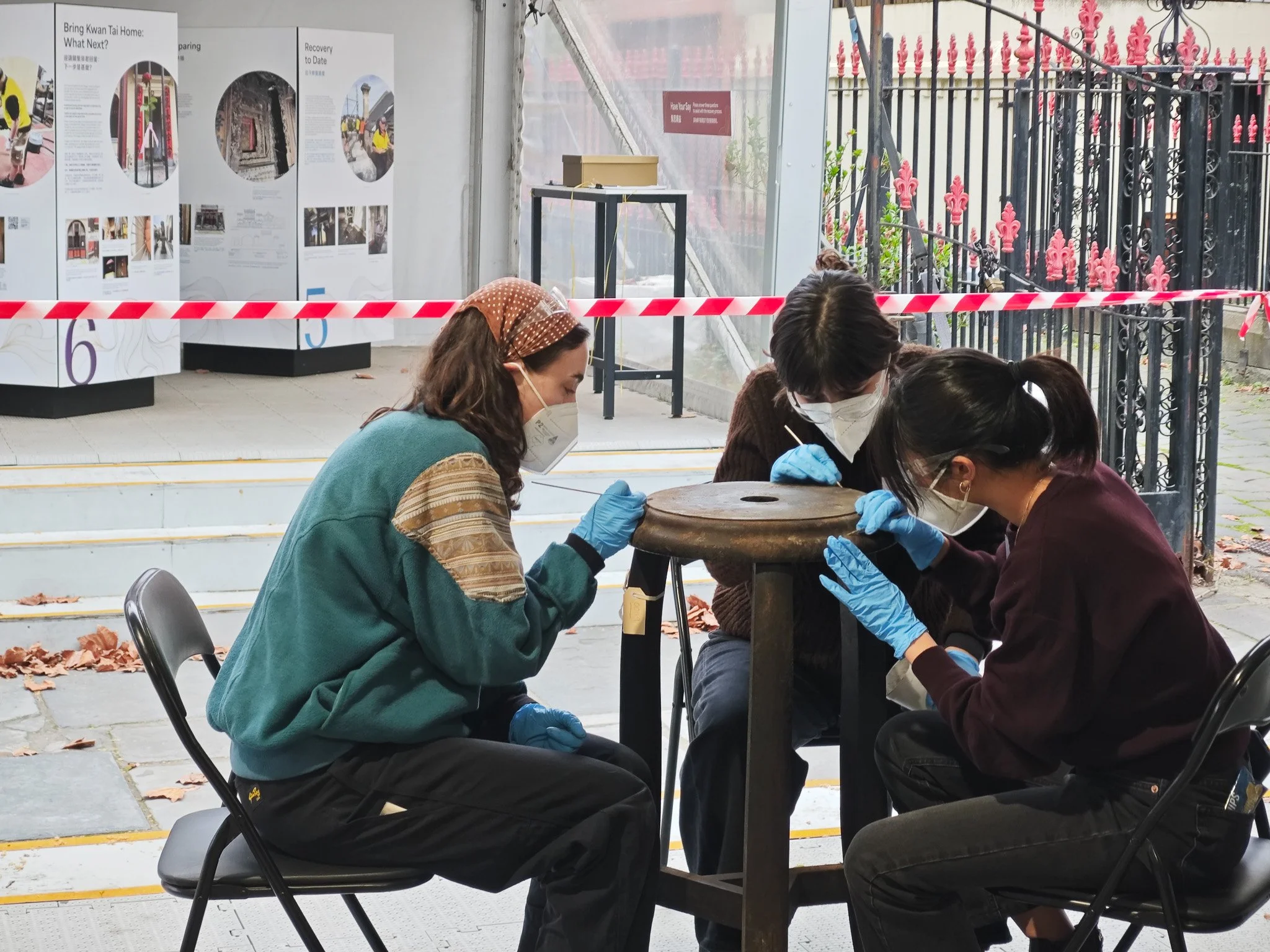
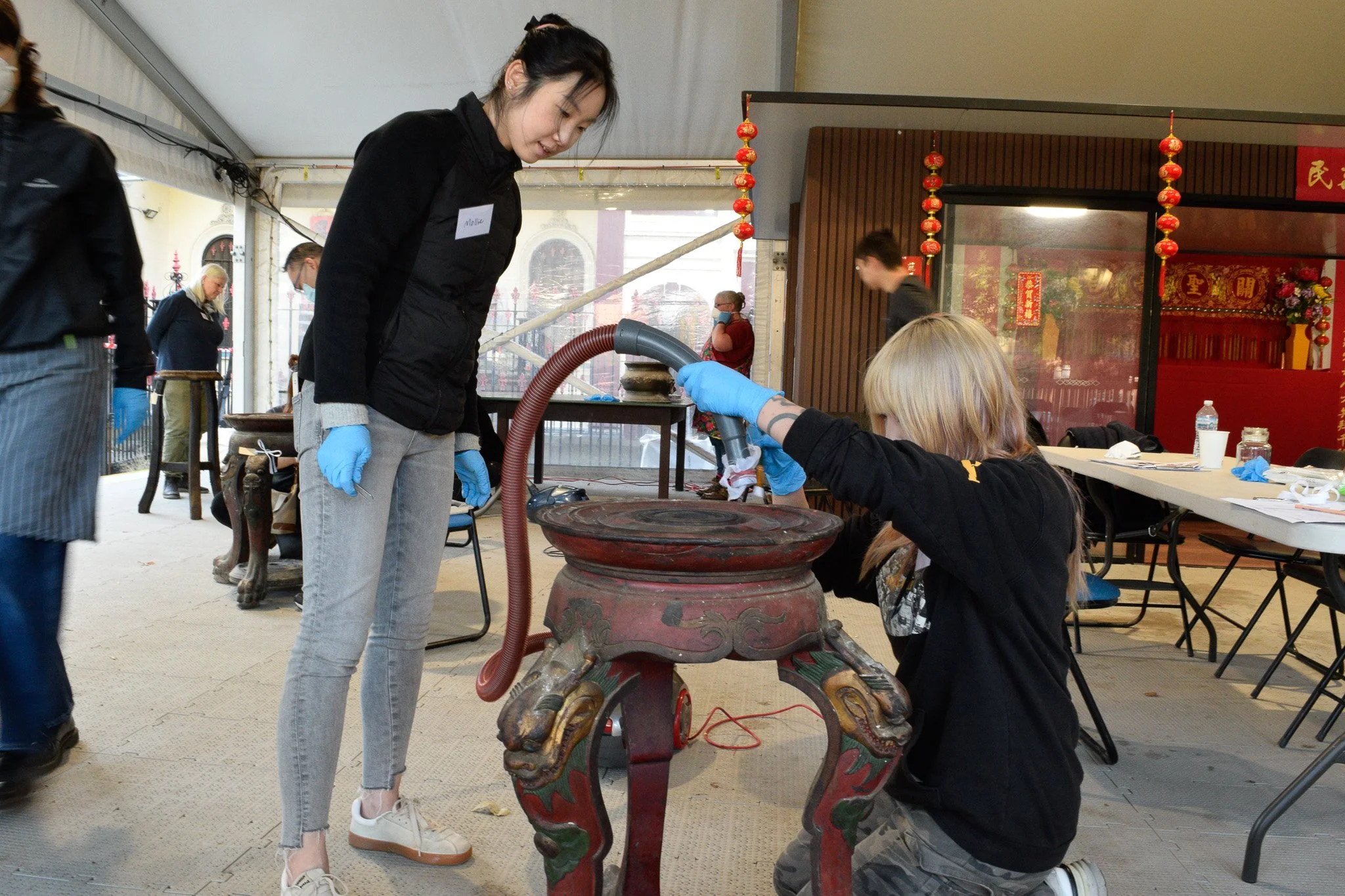
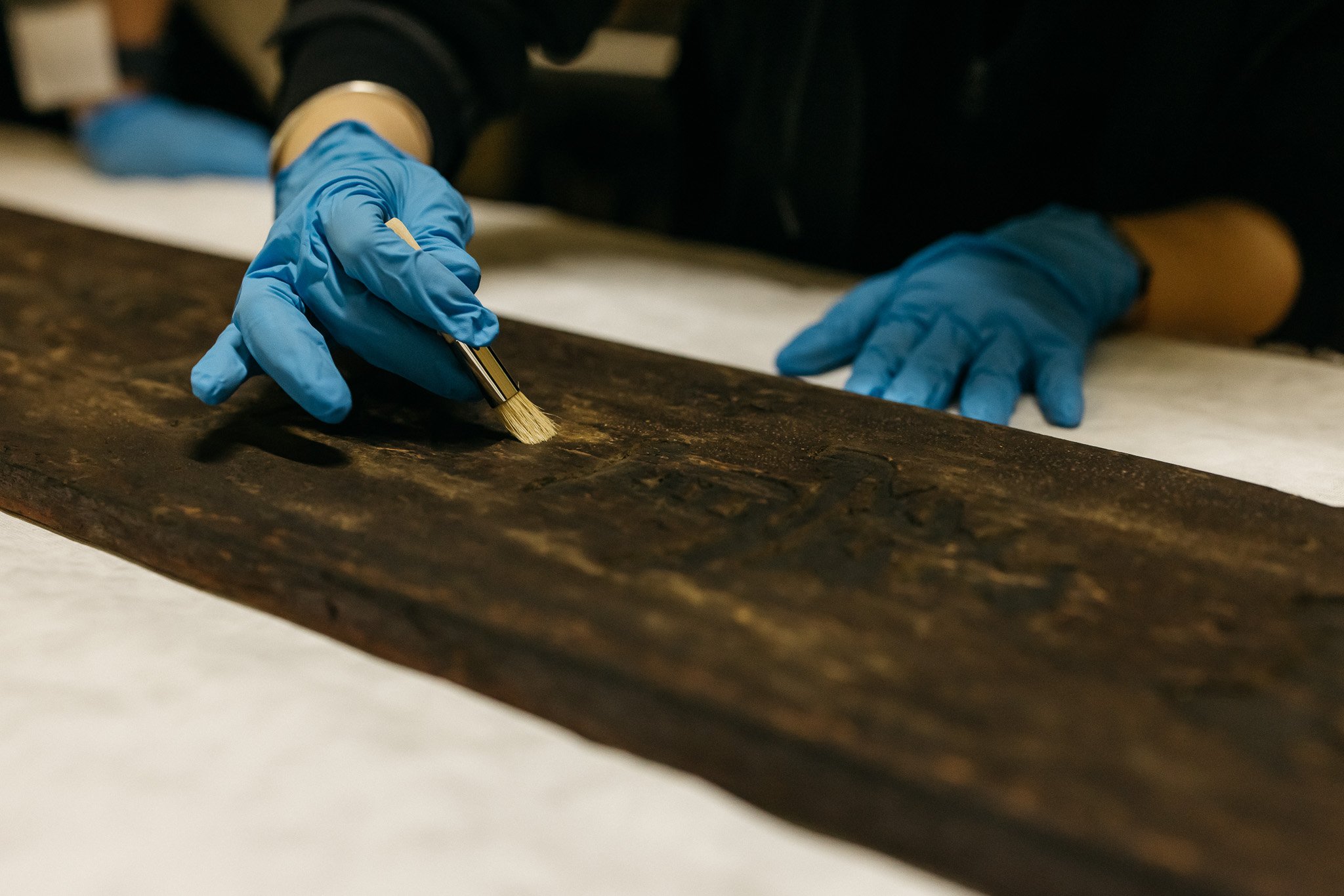
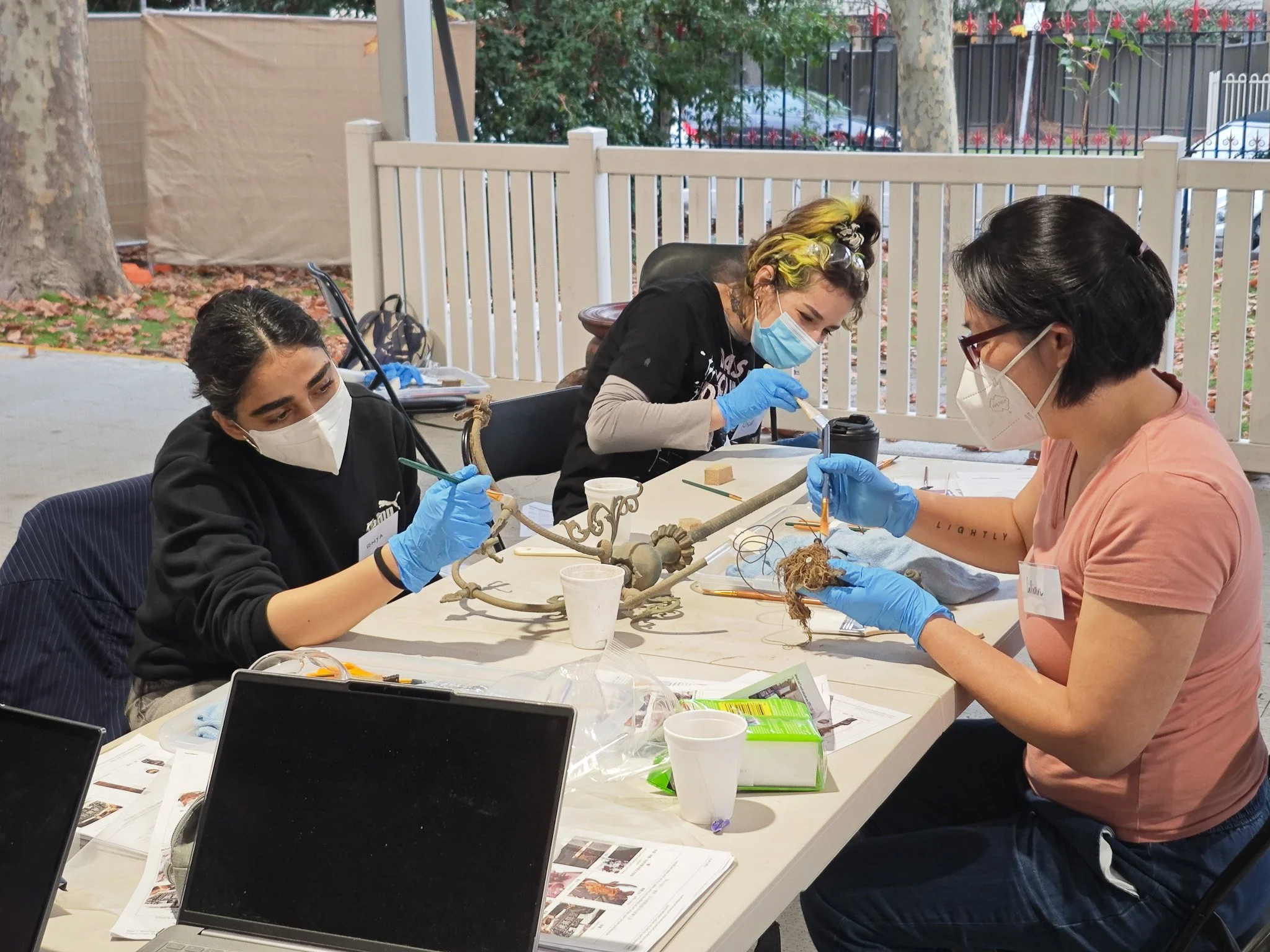
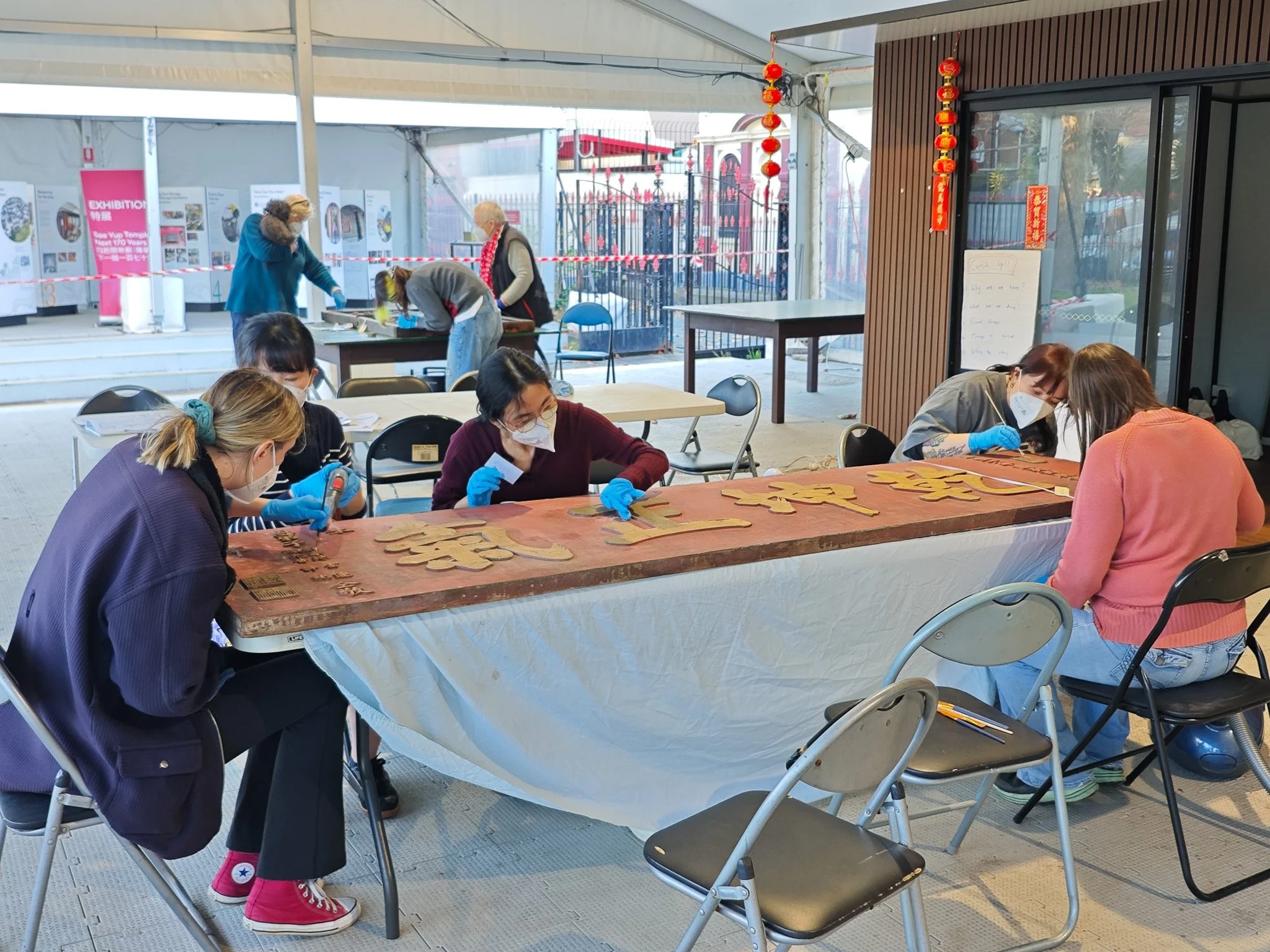
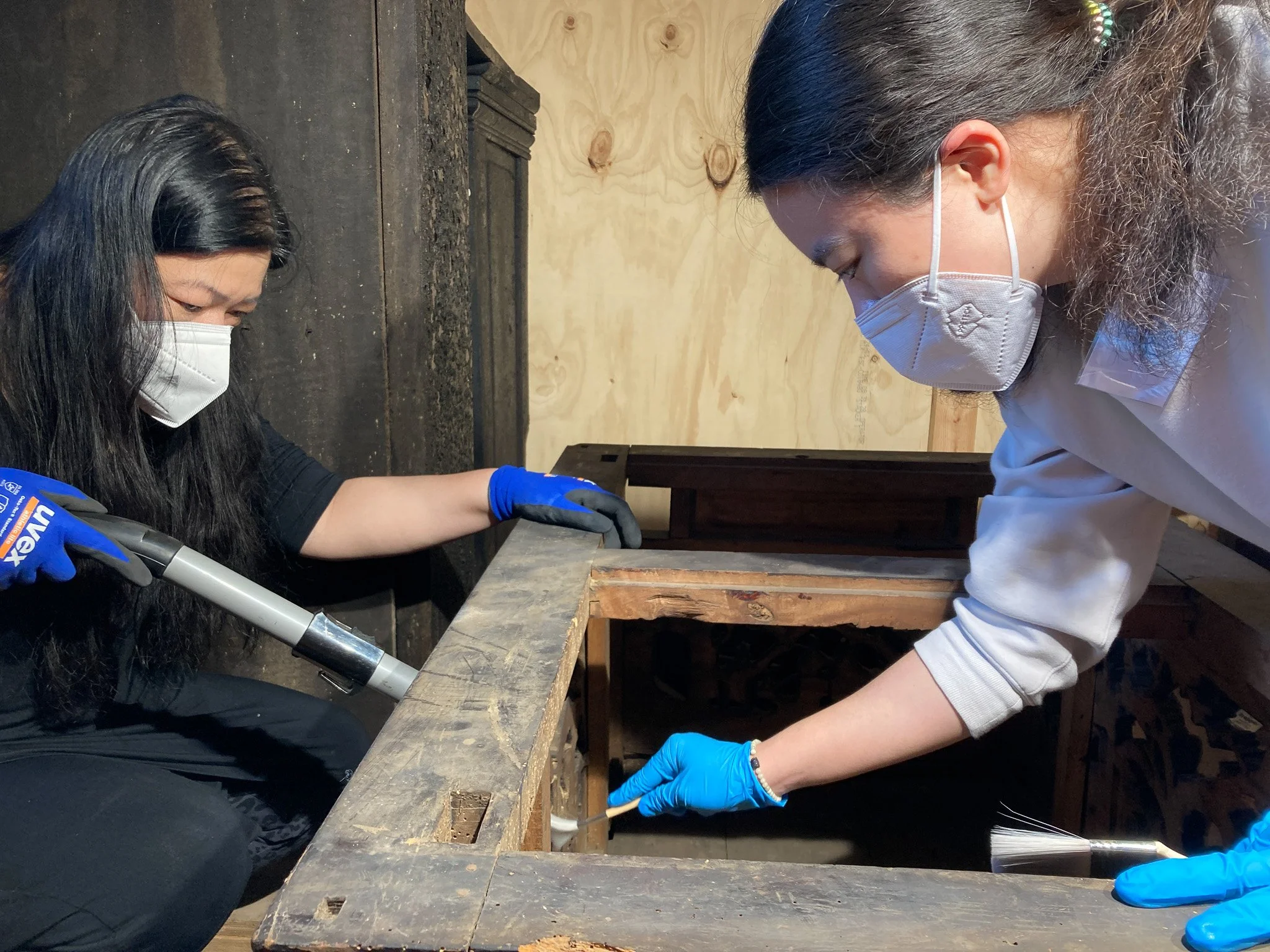
No two objects are quite the same. Volunteers have worked with large wooden plaques, carved surfaces, painted and gilded details, and metal objects, using different brushes, bamboo sticks, controlled vacuuming and other dry-cleaning materials.
The work is careful and gradual. Volunteers learn to look closely, test different approaches and respond to what they see on each surface.
每件文物都有自己的狀況。志願者接觸了大型木牌匾、雕刻表面、彩繪與鍍金細節以及金屬文物,並使用不同的刷具、竹簽、受控吸塵及其他乾式清潔材料進行工作。
清潔是一個細緻而逐步的過程。志願者學習仔細觀察、測試不同的方法,並根據每個表面的實際狀況作出調整。
More Than the Work 工作之外
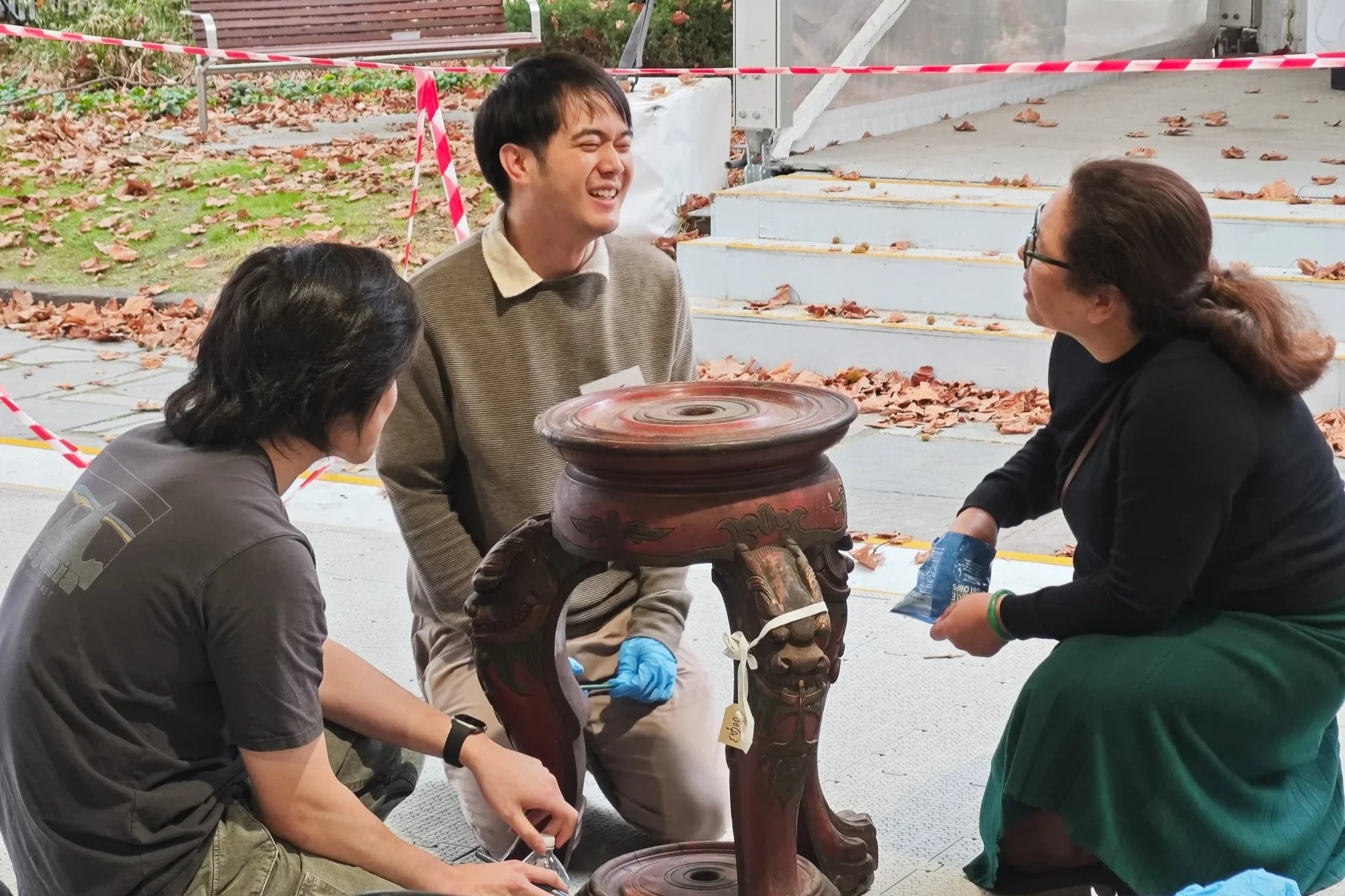
There has also been time to stop, have afternoon tea and talk. These quieter moments have been an important part of the workshops, giving volunteers, temple members and the project team time to get to know one another and continue conversations beyond the objects on the table.
工作坊中也有停下來喝下午茶和聊天的時間。這些輕鬆的時刻讓志願者、廟方成員與項目團隊有機會彼此熟悉,也讓圍繞文物展開的交流延續到工作之外。
What Comes Next? 接下來呢?
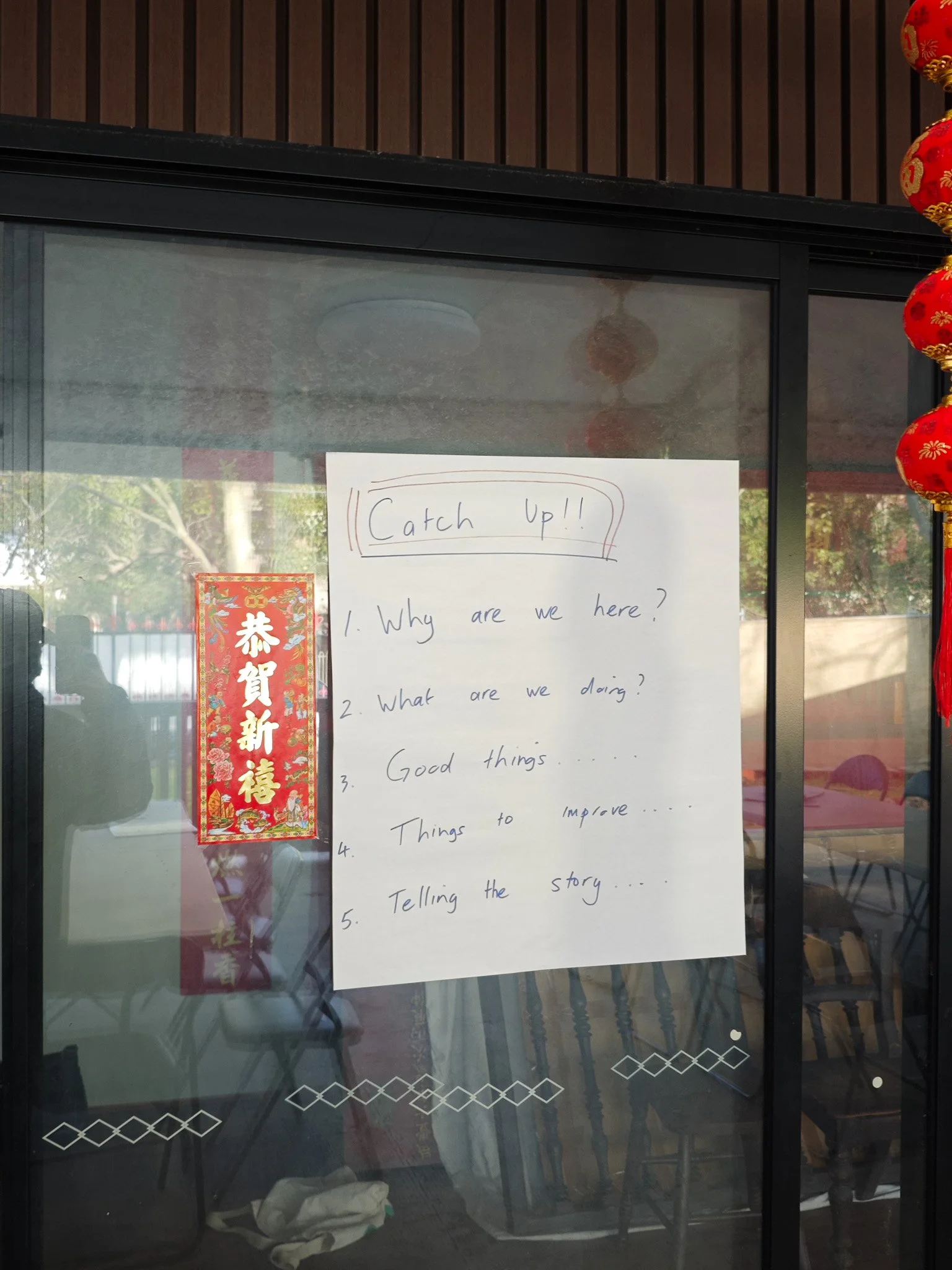
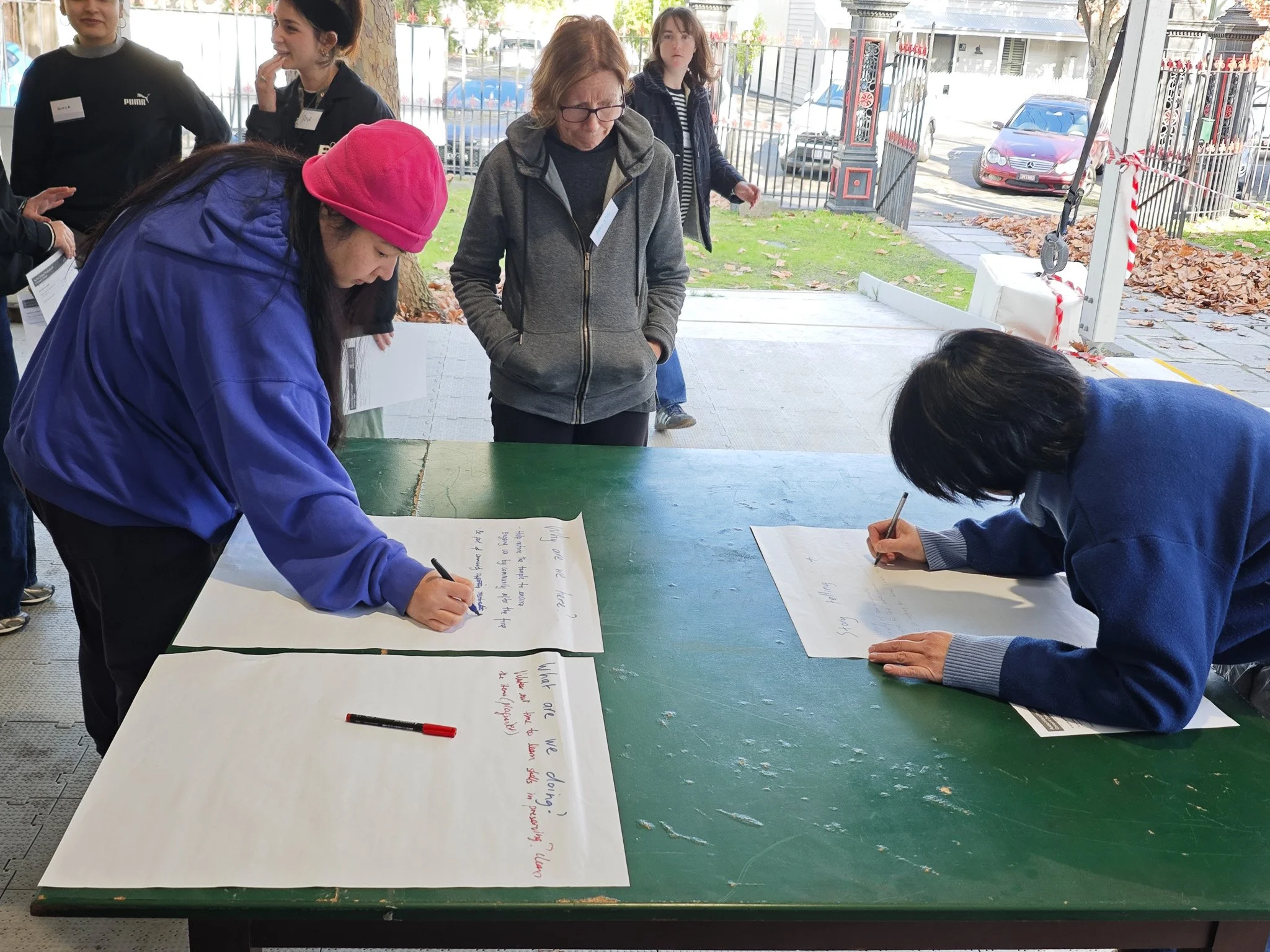
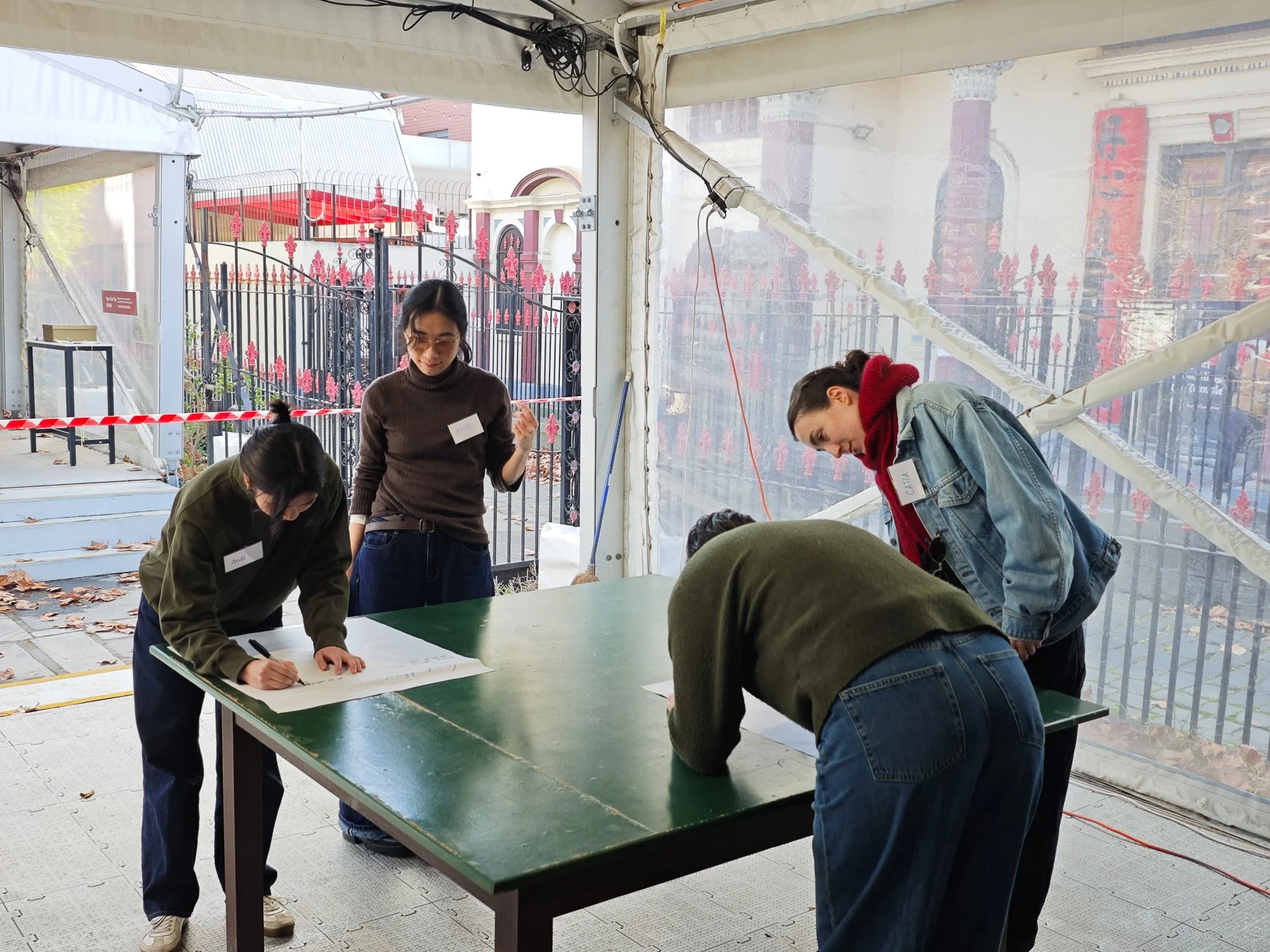
Volunteers have been invited to share what they enjoyed, what could be improved and what they would like to explore next. Their ideas are helping us reflect on the program and think about how future workshops might continue to develop.
我們邀請志願者分享他們喜歡的部分、可以改進的地方,以及下一步希望進一步了解的內容。這些想法幫助我們回顧目前的工作,也為未來工作坊可以如何繼續發展提供方向。
Acknowledgements
We would like to thank:
The See Yup Temple Recovery Project and President Michael Lam,
Facilitators Nicole Tse, Sophie Couchman, Danni Lin and Zeejay Tan and Designer Mollie Liu,
Robert Cripps Institute for Cultural Conservation, University of Melbourne,
Chinese Australian Family Historians of Victoria and the over 30 community and student volunteers.
The Community Heritage Grants program, funded by the Australian Government through the National Library of Australia; the Department of Infrastructure, Transport, Regional Development, Communications, Sport and the Arts; the National Archives of Australia; the National Film and Sound Archive of Australia and the National Museum of Australia, for supporting these workshops.
